
Exploring The Tapestry Of Indian Festivals
Amidst the tranquil Mango Meadows, shielded from the boisterous revelry of Holi, I find myself reflecting on the recent traffic snarl caused by Shigmo. Intended to herald the onset of spring fever, Shigmo is a celebration of Vasantasena, the army of Vasanta, the King of Spring, who shares a close kinship with Kama, the God of Love.
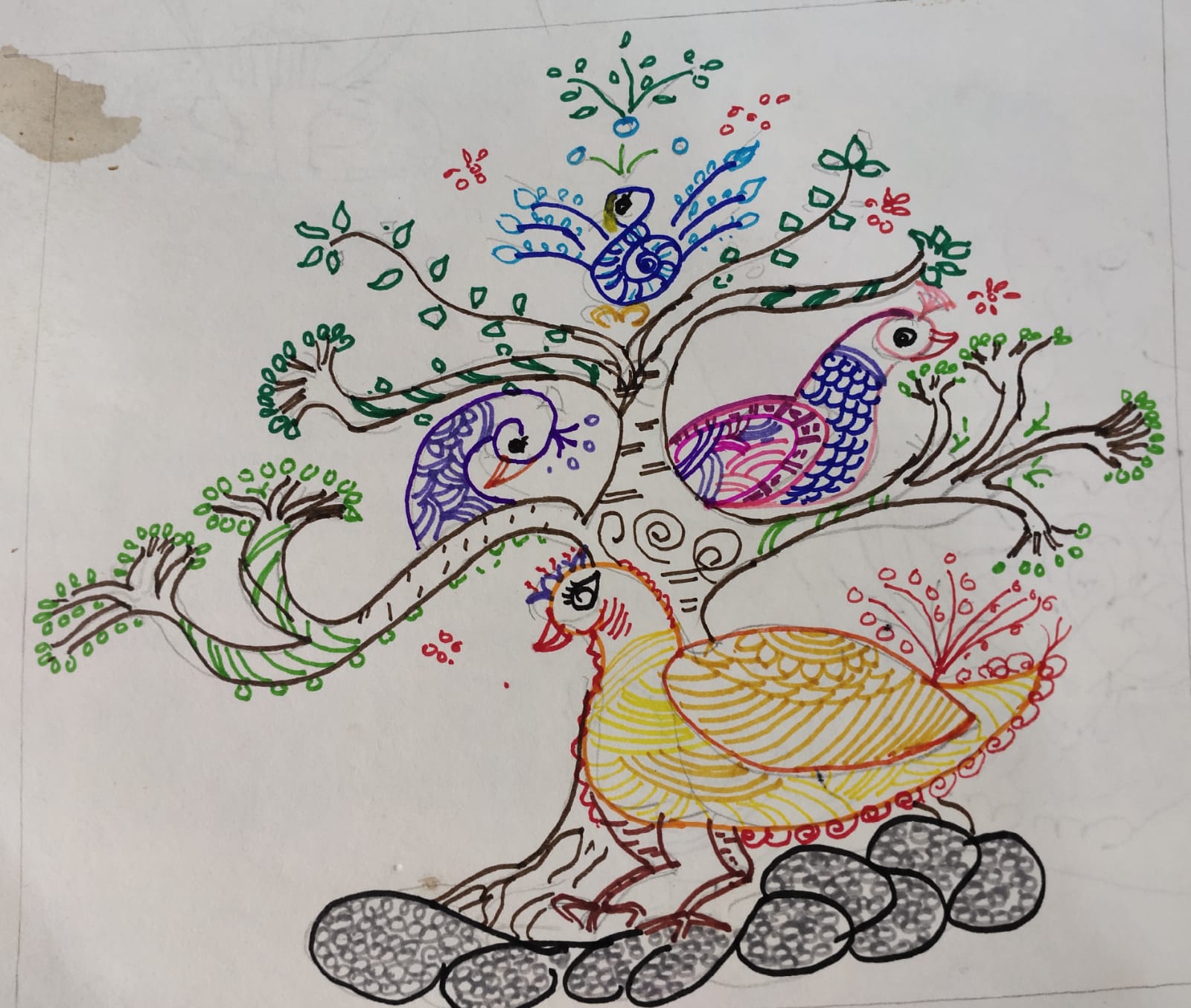
It springs to the mind that #inkotber52 has contributed to the musing, by springing upon us the prompt “spring”. To be I do not know why I did not do the usual protocol of ‘Merriam-webster’ choose the most improbable interpretation and eventually doodle it. Lets blame it on spring fever.
Spring, to the discerning eye, is not merely a transition of seasons but a symphony of new life and boundless energy. However, in our modernistic interpretation of Hinduism, we often find ourselves entangled in the dichotomy of good versus evil, overlooking the sheer delight of rejuvenation and the breathtaking beauty of blossoming flowers.
Let us embark on a journey through the tapestry of Spring Festivals in Indian Mythology and Tradition, where each thread is woven with tales of antiquity and vibrant cultural hues, including the captivating allure of Vasantasena and the romantic engagements it embodies.
Our first stop is the jubilant revelry of Holi, an extravaganza observed on the full moon day of the Hindu month of Phalguna. Here, amidst the riotous splashes of color and exuberant dances, we celebrate the arrival of spring—a season marked by the triumph of righteousness over malevolence. Legends abound, from the tale of Hiranyakashipu and Prahlad to the eternal love of Radha and Krishna, each adding a sprinkle of mythic charm to this joyous occasion.
Next, we embark upon the dawn of Vasant Panchami, the auspicious first day of spring. Dedicated to the venerable Goddess Saraswati, this festival sees devotees adorned in resplendent yellow, invoking blessings of knowledge and artistic prowess. As the air resonates with the chants of hymns and the laughter of children, we partake in the age-old tradition of Haate Khori, initiating the young minds into the realms of learning and wisdom.
In the tapestry of spring festivals, Vasantasena emerges as a poignant motif, symbolizing the gathering of young, beautiful men and women who are deeply interested in romantic engagements. This aspect adds a layer of romanticism and allure to the festivities, as communities come together not only to celebrate the renewal of nature but also to foster connections and relationships.
Finally, we find ourselves immersed in the euphoria of Vasantotsavam, a three-day celebration heralding the transition from winter to spring. Amidst the ceremonial sowing of seeds and the purifying ablutions of deities, communities come together in a harmonious display of revelry and camaraderie. Pansectarian in nature, this festival bridges cultural divides, uniting devotees in a tapestry of shared traditions and beliefs, where the spirit of Vasantasena permeates the atmosphere, igniting hearts with the flame of love and desire.
In conclusion, let us revel in the resplendence of spring festivals, not merely as markers of time but as timeless celebrations of renewal and vitality. From the vibrant colors of Holi to the solemn chants of Vasant Panchami, and the romantic allure of Vasantasena, let us embrace the rich tapestry of Indian mythology and tradition, weaving together the threads of cultural heritage and timeless wisdom into a masterpiece of collective celebration and joy.
 Parwatisingari's Weblog
Leave a comment