
PURVA RANGA
The sacred prelude to a performance.
Purvaranga is an integral part component of Indian performing arts, serves as the prelude to every dramatic performance. It also acts as the call to attention for the audience and allows them the settling in period.
Purvaranga is meticulously structured and holds deep cultural and spiritual significance. We find detail descriptions in the 2nd, 3rd and 5th chapter of Natyashastra.
Traditional Indian theatre is an ‘Yagna’ or a performance, usually dedicated by a patron to the deity. Quite often the it is put up in relation to a temple related event. So, binding of the mundane and the religious was needed. As we peel the layers what emerges is the ethno-religion where nature and ancestors are revered.
the Purvaranga begins with dedications to the art and deities it honours. The following steps are orchestral.
- Pratyahara- the opening: the curtain remains closed and musical instruments are carefully arranged setting the stage for what is to come.
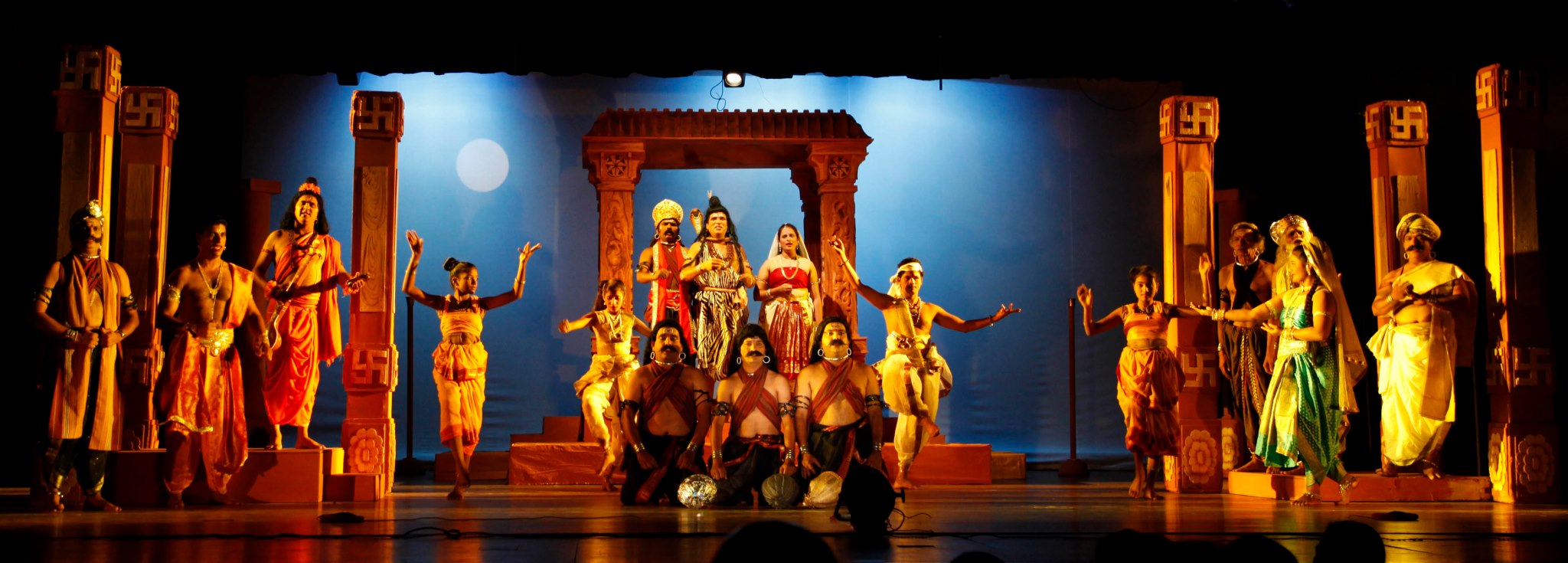
- Avatarna – the descent: performance commences with the entry of the Nagas, rakshas,mystical and mythical beings who add the other worldly dimension to the stages making it larger than life.
- Arambha – the Beginning: Vocal musical exercises ensue resonating with the soul as the Gandharva and the Dhanava weave their melodious magic.
- Asravana – Tuning of the Instruments. The instruments are tuned to achieve a uniform harmonious pitch. It also allows the musicians to find the pitch that suits best for the venue and the theme of the performance.
- Vaktrapani – the performance technique that is the style and expression is perfected for setting the stage for a masterful performance.
- Parighattana – setting of the stringed Instruments. This is dedicated to the Rakshasas, ancient demons symbolically representing the elements that could disrupt a performance. Of course, it they are labelled dark forces and are appeased.
- Samoghatana – setting of the Rhythm Guhyakas the secrete beings contribute to the rhythm infusing the performance with a sense of anticipation and suspense.
- Margasarita – blending instruments with the drums: the percussion, and the strings are merged to create a seamless powerful auditory landscape that captivates the audience.
- Asarita – setting rhythms percussion has Gati and tala components that is pace and beats. There is building of a crescendo with the rhythmic ethos, as the narrative unfolds to its ‘theermana” or the conclusion.
- Gitividhi – honouring the Gods: finally, the gods are honoured and the divine presence is invoked to accept the dedication
This entire music and vocal dedication create the mood for the dedication of the play to whatever the intention the “yajamana” in other words the sponsor sets. It is done through either the Kshetrapala, daiva, that is the guardian, or a grama devata that is village deity.
From the audio world the Purvaranga now evolves to a visual space. This is not just a set of sacral procedures it is a unique form of worship, a ritualized homage to arts and the divine. When the curtain rises the audience have a “Yajna” or a dedication where there is “Bindu” or a central idea that is conveyed through the journey “prayatna” the effort for a “Phala Prapti” or achieving of an end result. The pros and cons of the acts the various points view is then contemplated as “Chintana” the experience created is the “rasa” and it allows the viewer to ponder through his point of view.
Purva Ranga is the unique form of worship a ritualized homage to acknowledge the connect between the art and divine for both are creations. On stage we begin with
- Madraka or vardhamanaka: dedicated to Rudra the divine destroyer. This is usually set in chaturashra or the 4-beat cycle and 16 or 36 steps are taken. Bringing the sutradhara and his assistant to the centre stage.
- Brahmasthapana that is the CenterStage and that is revered with flowers, and sacrament with water and other rituals, this is usually done by the Sutradhara and his assistants.
- Uttapana: Is to acknowledge Jarjara the weapon of Indra.
- Parivartana: is the honouring of the dikpalas, or the cardinal directions. It is also a way of honouring the audience who attend the performance from various directions.
- Nandi: that acknowledges and thanks the King who allows the dedication and the Brahmins who officiate the dedication and audience who allow the fructification of the dedication.
- Suskaprakrsta: where the Jarjara and the Pitru’s are worshipped. The Jarjara here is the arbor mundi that is again assimilating nature worship, and pitru the ancestor worship.
- Rangadwara: this is the only place where the Vishnu component enters. Interestingly Agni Purana the precursor of Natyashastra dedicates the rangadwara puja to Nataraja.
- Cari: The movement, interpersonal and facial ones to Uma the consort of Shiva.
- Mahachari: the more intense and rigorous movement to Rudra.
- Trigata: a three-way conversation between the sutradhara and his assistants as if to consolidate how to introduce the play to the audience.
- Prarocana: or the subtle hint of unfolding the drama, where the writer is introduced, and the story is given a context. This ends with the “pravesh dharu” or the call for the opening artist to enter the stage. With the Natanakam.
Natanakam Purva Katha Pujyam
natyashastra.
The play is about an event, person or situation that is pujyam or of reverence.
This post is recreated for The Blogchatter Half Marathon, from the Lecture Demonstration conducted at the National conference of Natyashastra and Yakshagana at Dharwad JSS college.
References
Sanskrit drama in Performance. MLBD publication
Drama and rituals of early Hinduism. MLBD publication
Top of Form

 Parwatisingari's Weblog
Leave a comment