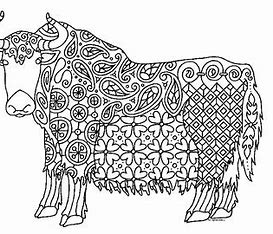
In the high mountains of the Himalayas, where the air is thin and the peaks pierce the sky, there lived a wise old Yak named Kailash (Bos grunniens). Kailash was not just any Yak; he was revered by the animals of the mountains as a powerful spirit, a totem of wisdom, and a guardian of the ecosystem.
One day, as Kailash roamed the rugged terrain, he came across a gathering of worried animals—a snow leopard, a Himalayan monal, and a mountain goat. They were fretting over the impending imbalance in the ecosystem.
“What troubles you, my friends?” asked Kailash, his voice resonating with the wisdom of generations.
The snow leopard, with a furrowed brow, spoke first, “Our home is changing, Kailash. The delicate balance of our ecosystem is in peril. The plants are dwindling, and the streams are drying up. Without the equilibrium of nature, our survival is uncertain.”
The Himalayan monal nodded solemnly, “Indeed, Kailash. Without the lush vegetation, our food sources diminish, and our vibrant colors will fade.”
Kailash listened intently, then gazed across the landscape, deep in thought. Suddenly, a realization dawned on him. With a determined gleam in his eye, he spoke, “Fear not, my friends. There is a solution to restore balance to our beloved mountains.”
As a power animal, Kailash possessed an innate connection to the spiritual energies of the mountains. He knew that by harnessing this power, he could guide the creatures of the Himalayas toward harmony and balance.
The wise Yak then embarked on a journey to spread his wisdom among the creatures of the Himalayas. He taught the importance of harmony and balance in nature, emphasizing the role of each species in maintaining the delicate ecosystem.
But Kailash knew that actions spoke louder than words. He led by example, demonstrating how his own grazing habits helped prevent overgrowth of vegetation, allowing new plants to thrive and preventing soil erosion. He showed how his droppings fertilized the soil, enriching it for other plants to grow.
Slowly but surely, the animals of the mountains began to understand the significance of their roles in the ecosystem. The snow leopard patrolled the mountains, keeping the herbivore population in check to prevent overgrazing. The Himalayan monal spread seeds as it flew, contributing to the regeneration of forests. And the mountain goat, inspired by Kailash, adopted more sustainable grazing practices.
With the combined efforts of all the creatures, the balance of the ecosystem was restored. The streams flowed once again, the forests flourished, and life in the mountains thrived.
And so, thanks to the wisdom and guidance of the wise old Yak, Kailash, harmony was preserved in the majestic Himalayas, ensuring the well-being of all who called it home.
As a spirit animal and totem of the Himalayas, the Yak (Bos grunniens) symbolizes wisdom, strength, and stewardship, guiding those who seek balance and harmony in their lives. Its habitat, the high-altitude regions of the Himalayas, reflects its resilience and adaptability to harsh environments.

Y for Yak
#BlogchatterA2Z
The Yak holds significant social and cultural importance in regions where it is found, particularly in the Himalayan region and the Tibetan Plateau. Here are some aspects of its social and cultural role:
- Economic Livelihood: Yaks serve as a vital economic resource for local communities. They are valued for their milk, meat, wool, and hides. Yak products are often used for sustenance, trade, and income generation, supporting the livelihoods of Himalayan and Tibetan communities.
- Transportation: Yaks are well adapted to the harsh terrain and high altitudes of their habitat, making them invaluable as pack animals. They are used to transport goods and supplies across rugged mountain trails where other means of transportation are impractical.
- Cultural Symbolism: Yaks hold deep cultural significance in Himalayan and Tibetan cultures. They are revered as symbols of strength, resilience, and adaptability. In many local traditions and ceremonies, yaks are honored and respected as sacred animals.
- Nomadic Lifestyle: Yaks play a central role in the traditional nomadic lifestyle of many Himalayan and Tibetan communities. Nomadic herders rely on yaks for their livelihoods, moving their herds seasonally to find suitable grazing grounds.
- Celebrations and Festivals: Yaks are often celebrated in cultural festivals and rituals. Events such as yak festivals showcase the cultural heritage associated with yak herding, featuring activities such as yak racing, yak riding, and displays of traditional yak husbandry skills.
- Art and Crafts: Yak wool is prized for its warmth and durability, making it a valuable material for traditional crafts such as weaving and felting. Products made from yak wool, such as clothing, blankets, and carpets, are integral to local craftsmanship and cultural expression.
Overall, the Yak’s social and cultural role extends beyond its practical utility as an economic resource to encompass its symbolic significance in the cultural fabric of Himalayan and Tibetan societies.
Xammi Xammans insights on Alphabetnimal X for blogchatterA2Z challenge.
 Parwatisingari's Weblog
Leave a comment