
The Mathemagician and the Art of leading Students (to Wisdom)

Its ‘Hail Mary” to all the teachers from the world and her husband.
At 58, I’ve gathered more teachers than gray hairs, and trust me, that’s saying something. From high school know-it-alls to five-year-old sages, I’ve had my fair share of instructors, mentors, and life coaches (unofficial, mostly). But the one who stood out was Silva Master, the mathemagician who turned numbers into life lessons and casually threw shade at modern teaching. He was the type of teacher who could make you feel guilty for not loving algebra. And believe me, I tried to hate it.
Silva wasn’t just a teacher—he was a philosopher armed with a chalkboard. One day, he placed a 100-rupee note on his desk and announced, “I trust my students not to take this. Do you trust your words to be treated with the same respect?” The note stayed untouched. I’m not sure if it was respect or fear, but hey, results are results.
A Classification of Educators: Because Why Not?
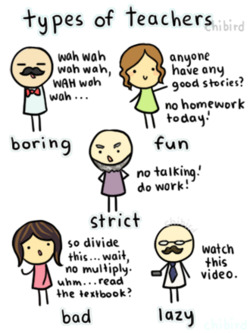
Through the years, I’ve developed a nifty classification system for teachers. It’s unscientific but highly practical—just like most of life.
The Draconian: Think of them as the educational version of a tyrant. They loved rules, rulers (the wooden kind), and ruining your day. From them, I learned the art of evasion—education if you will, in getting away with murder (or at least unfinished homework).
The Hypocrite: These folks loved giving lessons on fairness while applying them selectively. For the Lodges, one set of rules. For the plebeians, well, good luck. They were the originators of “Do as I say, not as I do.” Classic.
The Guru: The rarest breed. The kind that don’t teach but inspire you to figure things out yourself. Silva Master was one such teacher. He could take a math problem and turn it into a sermon on life’s moral dilemmas. Forget X and Y—he wanted us to solve for the meaning of existence.
Math or Philosophy? Why Not Both?
Silva Master wasn’t big on “teaching math” so much as using math to unravel the universe’s secrets. It was never just about calculations, which, in his words, schools “pathetically” limit themselves to teaching. No, he was after bigger fish—like proving that life, much like math, is about finding balance (or at least trying not to lose it completely).
One day, he took a break from algebra to give us a crash course on morality. “The worth of a person isn’t where they come from, but in their deeds and thoughts,” he said, probably after solving an equation I can’t remember. That day, I stopped worrying about my lackluster math scores and started worrying about my deeds.
The 5 year old who imparted wisdom
While Silva Master was busy teaching me life through numbers, my youngest teacher—a five-year-old at Puttaparthi—taught me something far simpler yet far more profound. During a performance for Baba’s birthday, she had to represent ‘Atmanivedanam,’ the idea of total surrender to the divine. While I overcomplicated everything, she turned to me and said, “Didi, I’m not here because everything is Baba.” And there it was. A five-year-old had out-philosophized me. No big deal.
A Zen Reminder: You’re Never Fully Prepared
Let’s talk about real teaching for a moment—according to Zen, anyway. They say the teacher appears when the student is ready. What they don’t tell you is that the student never feels ready. You spend most of your life thinking you’re not, when in fact, you were always the one who had to decide what to do with what you learned.
Silva Master once said that teachers only give 50% of their knowledge. The rest is on the student to extract and, more importantly, use. It’s ironic, really, that we spend so much time blaming teachers when, in the end, it’s us who have to do the heavy lifting.
The Rebel Learner
Back in school, I wasn’t exactly a model student. I questioned everything, broke rules, and read far more than teachers would’ve liked. It wasn’t rebellion for the sake of it (okay, maybe sometimes), but a refusal to conform to the boxed-in world of “right answers.” Silva Master got that. He understood that curiosity didn’t have neat little edges; it spilled over into messes.
Meanwhile, the Draconians just tried to control the chaos. Funny, since chaos is where the real learning happens.
Lessons Beyond the Classroom
Looking back, I realize the real teachers weren’t always the ones standing at the blackboard. Silva Master was a gem, but there were others: the books I devoured, the mistakes I made, even the hypocritical teachers who showed me what not to be. They all contributed to the mess of learning.
Ultimately, Silva Master’s greatest lesson wasn’t in numbers but in what we did with them. As I reflect now, I see the irony—teaching isn’t about what you know, but about the student who figures out what to do with it. And like my Zen teachers say, “The teacher only appears when you’re ready.”
In other words, you’ve been warned. Your 100-rupee note is still on the desk. What are you going to do with it?
 Parwatisingari's Weblog
Leave a comment