Typing Loud , Living Bold With Aunt Amritha.
It was International Caps Lock Day, and Aunt Selvi’s ever-lively friend, Amritha Shenoy, was visiting. Now, Amritha at 85 isn’t your delicate, soft-spoken grandma wrapped in silk saris. No, she’s more like a walking punctuation mark—bold, clear, and impossible to ignore. A Punjaban married to a Konkani, she carried herself with a sharp elegance—pashmina draped over her shoulder (yes, even in the humid Canara heat), a bindi large enough to claim her territory, and an elegant walking stick that was more style than necessity. Since moving into a senior community after her husband passed, Amritha had embraced life in uppercase—always ready with a story, a laugh, and a lesson.
Today’s lesson? The kids had unknowingly walked right into it by bringing up Caps Lock Day.
“Why do we even need a Caps Lock Day?” asked Gus, shaking his head. Doris chimed in gleefully, “TO REMIND EVERYONE TO STOP YELLING IN EMAILS.”
“Oh, there’s more to it than that,” Aunt Selvi said, just as Amritha’s eyes lit up with mischief. “Back in 2000, some smart fellow from Iowa—Derek Arnold—thought it would be hilarious to create a day where everyone should just hit the Caps Lock key and type in ALL CAPS.” She paused dramatically. “Because, why not?”
Amritha cackled. “He was poking fun at people who accidentally press the key and end up typing LIKE THEY’RE ANGRY ALL THE TIME!” The kids giggled, but Doris wasn’t done yet. “But we NEED Caps Lock!” she exclaimed. “Especially when we type in our languages, like Konkani or Hindi or Tamil. It’s ESSENTIAL.”
Amritha raised an eyebrow. “Oh really? Explain, child.”
Doris immediately launched into her example, “Like, if I want to type ‘AREY! TUM KIDHAR HAI?’ I need the CAPS for emphasis. Or in Konkani, we use CAPS to make sure we sound as dramatic as possible! ‘AYO BABA, WHAT IS THIS?!’”
Even Gus joined in. “And in Tamil! How else can you express ‘AYYO’? Lowercase just doesn’t do it justice. Caps make it hit harder!”
Amritha laughed so hard, she nearly dropped her walking stick. “Well, you’ve certainly found the modern use for Caps Lock!” she said. “But it wasn’t always so easy to switch between lowercase and uppercase, you know.”
This caught the kids’ attention. “Back in the old days, before all these fancy computers,” Aunt Selvi began, “there wasn’t even a Caps Lock key. Typewriters only typed in uppercase letters. Imagine that—everyone was constantly shouting.”
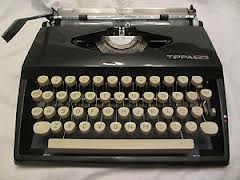
Amritha led them to her apartment, where she dusted off an old portable TIPPA typewriter and her prized Remington. “Now, these beauties,” she said, lovingly running her fingers over the keys, “were part of my typing school. But not all typewriters were this sophisticated.”
Gus leaned in. “So how did people type in lowercase?”
Amritha smiled, “It wasn’t until the 1870s that Remington, the typewriter manufacturer, came up with a brilliant solution. They added two characters to each key—uppercase and lowercase. But to switch between them, you had to use something called the Shift key.”
“That’s where the name comes from!” Aunt Selvi added. “The Shift key literally shifted the entire type bar up or down, so it would strike either the uppercase or lowercase letter onto the paper. No convenient ‘Caps Lock’ for long stretches of text back then. If you wanted uppercase letters, you had to press Shift manually, and for every letter.”
Doris, wide-eyed, asked, “So, people had to manually ‘shift’ between shouting and speaking normally?”
“Exactly!” Amritha said. “Typing required a bit more muscle back then, but it was revolutionary. It made the world quieter.”
Gus was intrigued by the layout. “But what about the keys? Like, why is it QWERTY and not ABCDE?”
“Oh, the QWERTY layout,” Aunt Selvi explained, with a nod from Amritha. “That’s another Remington brainchild. When typewriters were first invented, typists could type so fast that the keys would jam. Remington engineers came up with the QWERTY layout to slow them down a bit. The letters were deliberately arranged in a way that spread out common letters, so the keys wouldn’t get stuck together as often.”
Amritha nodded, “And here you thought it was just random nonsense on your keyboards. The layout was designed for speed and efficiency while also preventing the machine from choking on itself.”
Doris, not missing a beat, quipped, “So not only were people forced to slow down, but they had to shout less! No wonder Caps Lock Day feels like a rebellion!”
Amritha, with a twinkle in her eye, added, “Exactly. And that’s why Arnold’s creation is a little tongue-in-cheek. He was reminding us that we don’t need to shout—especially with technology making things easier now.”
The kids grinned, their earlier scepticism replaced with fascination. Amritha leaned back in her chair, resting her walking stick beside her, and said, “Remember, kids—whether you’re typing in QWERTY or using Caps Lock for some dramatic effect, it’s always about balance. Too much shouting in life—whether in typing or talking—and you’ll miss out on the subtler things.”
“Like when to use ‘AYYO’ and when to just say it softly,” Gus muttered, earning a hearty laugh from the group.
With a final, knowing smile, Amritha rose, her voice now soft and lowercase in its gentleness. “And don’t forget,” she said, “Caps Lock may make things louder, but wisdom comes in knowing when to shift.”
 Parwatisingari's Weblog
Leave a comment