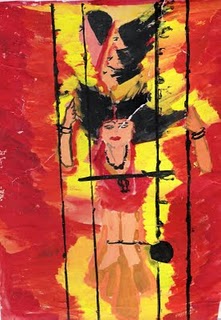
Revisiting the Practice Through History and Law
Key Points
- Sati, the immolation of a widow on her husband’s funeral pyre, predates Islamic invasions but intensified in certain regions during periods of war.
- Jauhar, a mass immolation by women to avoid capture, was associated with Rajput resistance, especially during Islamic sieges, but was a distinct wartime practice.
- 11 July 1832 marks a watershed moment when the British passed a formal bill criminalizing sati, following years of debate and intervention.
- The 1987 Commission of Sati (Prevention) Act reaffirmed sati as a punishable offense, recognizing the role of coercion and community pressure.
- We now ask: Was sati ever truly a voluntary act—or a ritualized form of murder?
The Historical Landscape of Sati
Sati’s roots trace back centuries before Islamic invasions, appearing in early texts and inscriptions. The Eran inscription (510 CE) and references by Diodorus Siculus (317 BCE) indicate its practice among Kshatriya elites, often as a symbol of loyalty or spiritual devotion.
During the medieval period, especially under Islamic invasions (8th–18th centuries), sati became more visible—particularly among Rajputs, where it served as a response to defeat or widowhood in battle-torn societies. The social standing of widows, often stigmatized or economically burdensome, further contributed to the practice’s persistence.
Legal Responses to Sati Across Eras
Mughal Measures
While some Mughal emperors attempted reform, their responses were inconsistent:
- Akbar (r. 1556–1605) discouraged forced sati and demanded widow consent.
- Jahangir (r. 1605–1627) issued bans in specific provinces like Kashmir.
- Aurangzeb (r. 1658–1707) banned sati in 1663 but struggled with enforcement in resistant regions.
These reforms were largely symbolic, and sati continued under various rulers due to local customs and lack of administrative reach.
British Intervention: The 1832 Turning Point
The decisive moment arrived on 11 July 1832, when the British colonial government passed a bill formally outlawing sati across its governed territories. This act followed Lord William Bentinck’s 1829 regulation in Bengal, which made the practice illegal, and set the stage for broader legal suppression.
The 1832 bill was pivotal for several reasons:
- It framed sati not as a religious duty but as a criminal act.
- It allowed courts to prosecute those who abetted or coerced women into self-immolation.
- It marked a shift from cultural accommodation to colonial moral policing.
Despite this, resistance continued in princely states and remote regions, where sati was seen as a matter of tradition and honor.
Modern Legal Framework: The 1987 Act
In the wake of the Roop Kanwar sati case (1987) in Rajasthan, the Indian Parliament passed the Commission of Sati (Prevention) Act, which:
- Criminalized abetment or glorification of sati.
- Allowed prosecution for constructing sati mandirs or organizing commemorative events.
- Treated coerced sati as culpable homicide or murder.
The Act reaffirmed the government’s stance: sati is not a voluntary religious act—it is a criminal offense.
Jauhar: A Wartime Parallel, Not the Same
While related in imagery, jauhar was distinct:
- It was a collective act during sieges, where Rajput women chose death over capture.
- Documented examples include Chittorgarh (1303, 1535, 1568) and Jaisalmer, especially under Islamic invasions.
- Unlike sati, jauhar was rarely ritualized outside the context of war and is not addressed in modern legal frameworks.
Its inclusion here helps contextualize how death in the name of honor took different forms—both individual and communal.
Economic and Social Drivers
Sati often masked deeper pressures:
- Inheritance control: Widows with legal claims threatened family wealth.
- Social ostracism: Widowhood was equated with misfortune; sati became a way to avoid lifelong exclusion.
- Religious glorification: Families and communities gained prestige and donations by building sati temples (sati mandirs) to honor those who immolated.
These factors reveal that many acts of sati were not acts of devotion but of desperation—or coercion.
Not All Widows Burned
Importantly, sati was not universal. Figures like Jijabai, mother of Shivaji, exemplify alternative widowhood roles. As rajamata, she wielded political power, managed court affairs, and shaped Maratha identity without resorting to self-immolation.
This variation shows sati was never inevitable, even in patriarchal or war-torn societies.
Final Reflection
From ancient inscriptions to Mughal decrees, from the 1832 British bill to the 1987 Indian law, sati has moved from spiritualized honor to criminalized homicide. The practice, once framed as an act of supreme devotion, is now widely condemned for its violence and coercion.
But one question lingers:
Was sati truly a voluntary act of suicide—or a culturally sanctioned form of murder?
References
- Wikipedia – Sati (practice)
- Wikipedia – Jauhar
- India Today – From royal rituals to grim reality
- The Culture Trip – The Dark History Behind ‘Sati’
- Your blog post – Sati Parampara
 Parwatisingari's Weblog
Leave a comment