
On squirrel appreciation Day and Own Your Own Home Day
It begins, as most serious life conversations do, in Aunt Selvi’s house, over piping hot idlis and coconut chutney that smells like reassurance.
The idlis are soft, steaming, and unapologetically white. The chutney is the right kind of coarse—none of that over-processed, blender-smooth nonsense. Home, at least for the moment, is a steel plate, a wooden dining table with one leg slightly shorter, and Aunt Selvi saying, “Sapdu, sapdu, while it’s hot,” as if warmth itself might escape if not eaten in time.
Jojo—Jenny’s friend—pushes her plate aside with the seriousness of someone about to announce adulthood.
“I’m thinking of buying a house,” she says.
Not thinking of moving. Not thinking of redecorating. Buying a house. The sentence lands heavily, like a new pressure cooker on an old stove.
Aunt Selvi pauses mid-scoop.
“House-ah?” she asks. “Why? You already have a perfectly good body to live in.”
This is Aunt Selvi logic. No warning. No segue.
Jojo blinks. “No, I mean… a flat. My own place.”
At this point, Alayaram clears his throat. He has been sitting quietly in the corner, documents spread out like sacred texts. Alayaram is a property lawyer, which means he has seen hope annotated, dreams footnoted, and enthusiasm stamped subject to approval.
“A flat is not ‘just a flat,’” he says, adjusting his glasses. “It is a file.”
Everyone groans.
“But,” he continues, immune to suffering, “since you are considering it, these are the basic documents you need.”
He begins counting on his fingers—slow, deliberate, lawyerly.
“Sale Deed. This is the truth serum. If it’s unclear, leave.”
“Mother Deed. Flats, like people, have lineage.”
“Approved Building Plan. What the government approved, not what the builder imagined.”
“Completion or Occupancy Certificate. Proof that humans are legally allowed to live there.”
“Encumbrance Certificate. To confirm the flat is not secretly committed elsewhere.”
“Property Tax Receipts. Governments forgive nothing.”
“Khata or Patta. Identity matters.”
“Agreement for Sale. The beginning of patience.”
“No Objection Certificates—water, electricity, fire. Fire, especially, is vocal.”
He stops. Sips his coffee. Content.
Jojo stares. “That’s… a lot.”
Alayaram nods. “Owning a house requires evidence. Owning a home does not.”
The sentence settles quietly.
Outside, a squirrel chooses this moment to run along the compound wall. It pauses. Looks in. Assesses. Runs again.
Aunt Selvi smiles. “See? Even he owns property.”
“Occupies,” Alayaram corrects. “Legally speaking.”
The squirrel, unimpressed by legal distinctions, climbs the mango tree with conviction.
I remember our own squirrel—a rent-free tenant—who believed that every time I cleaned my daughter’s table, I was conducting a hostile takeover. Angry eyes. Tail flicking. Absolute certainty that this is my space.
“Why are humans so obsessed with owning?” Jenny asks, dunking her idli.
“Because,” Aunt Selvi says, “we forgot something.”
“What?”
“That the body is already a home. The soul lives there. No lease. No deposit.”
We say the sky is our father and the earth our mother. By that logic, we are already held. And yet, we still need walls, roofs, locks. Safety. That layering—this translation of cosmic belonging into concrete shelter—is acculturation.
“So a house is for safety,” Jojo says slowly, “and a home is for people.”
“Yes,” Aunt Selvi nods. “A house protects you from rain. A home protects you from loneliness.”
There is a pause.
Because loneliness is not just about being alone. It is about standing outside the consensus—outside the perpetual conditioning that tells us who we are, how we should live, what success looks like. Without that consensus, we struggle to validate our existence. We fear loneliness because it asks us to stand without mirrors.
Perhaps that is why we build houses so carefully. Proof feels safer than presence.
Outside, the squirrel returns, cheeks full—planning for a future it trusts will arrive. It does not own the tree, but it belongs to it. It prepares. It contributes. It knows when to gather and when to rest.
Tensing Dorjee, the Buddhist teacher, speaks of harmony between inner space and outer space—the alignment between the home within and the shelter without. When the inner space is settled, the outer space does not have to work so hard to convince us we belong.
“Maybe,” Jenny says softly, “owning your home is not about registration.”
Alayaram sighs. “But registration still helps.”
Laughter breaks the weight.
Jojo looks around the table. “So what am I really buying?”
Aunt Selvi pushes another idli onto her plate. “Buy a house if you must. But don’t confuse it with home.”
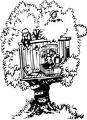
Home might just be this:
Hot idlis. Familiar voices.
A squirrel on a tree.
A body that holds you.
An inner space that no longer fears standing alone.
And that—no document can certify.

 Parwatisingari's Weblog
Leave a comment