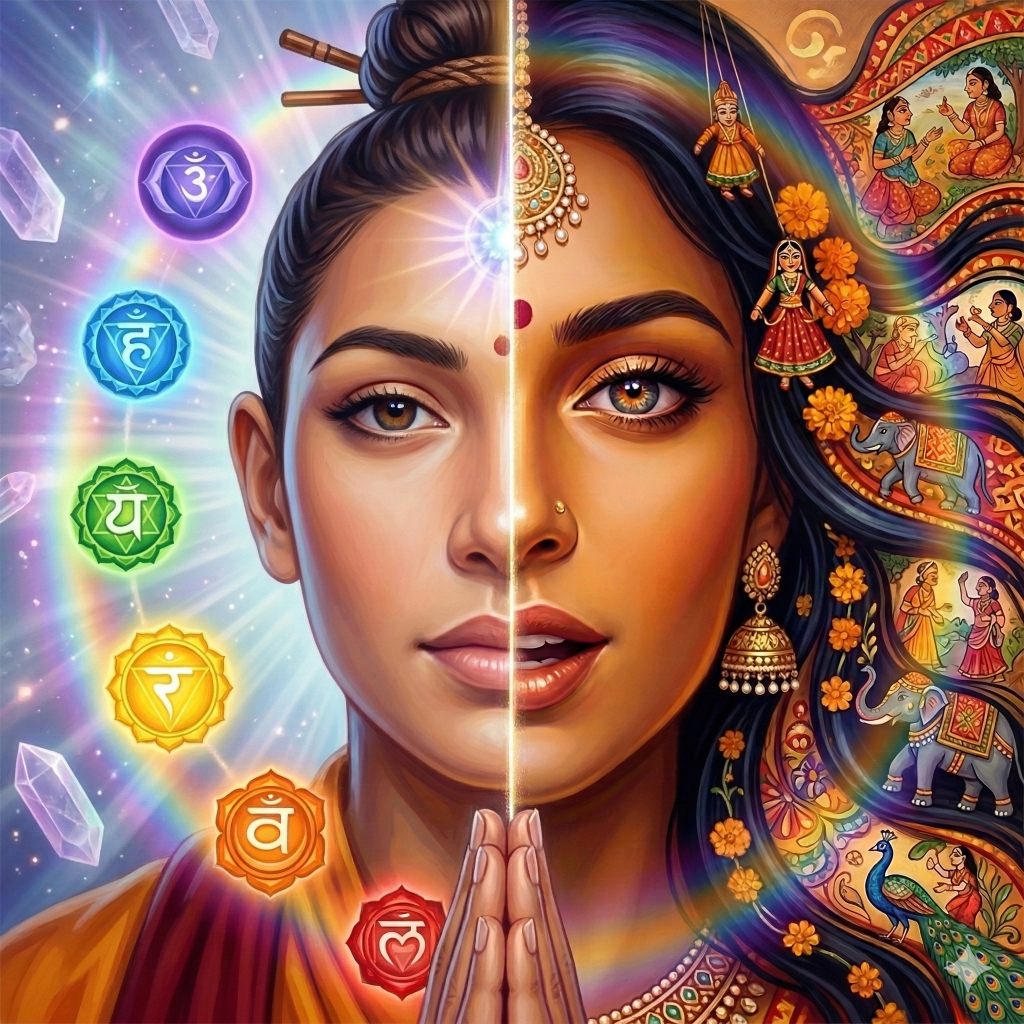
I have come to suspect that my inner life is curated by a rotating cast of feminine presences who do not technically pay rent yet occupy considerable psychic space. They do not knock. They simply enter, rearrange the furniture of perception, and call it growth.
When I began paying attention, I noticed they operate in two distinct but overlapping realms: trance and storytelling. In trance, they shape how I experience myself. In storytelling, they shape how I express that experience to the world. The inner current and the outer narrative. The unseen pulse and the spoken word.
In trance, the archetypes arrive as felt states before they become characters. They are atmospheric. They change the weather inside.
The Mother comes first because she often does. She settles into my chest with warmth and a sense of responsibility. In this trance, I become the caretaker of everything — projects, people, even the emotional climate of a room. She resembles Sita in her endurance, composed even when walking through fire. Under her influence, I feel steady, patient, quietly strong. I also forget to rest.
Then comes the Maiden. Light-footed, bright-eyed, hopeful to a fault. She carries the energy of new beginnings. In trance, she feels like possibility humming just under the skin. She reminds me of Vasantasena — open-hearted, curious, stepping into the world as if it might be kind. When she is present, I say yes to things. I begin again. I believe.
But she is not good at reading fine print.
The Lover follows sometimes, not merely romantic but deeply attuned. She is the archetype of intimacy, creativity, and aesthetic devotion. In trance she heightens sensation. Colours look richer. Music feels personal. The world becomes textured. She asks, “What moves you?” and expects an honest answer.
Then there is the Crone. She does not rush. She arrives with a slower rhythm, a quiet seeing. In trance she feels like distance from drama. Perspective. The ability to observe my own theatrics with mild amusement. She carries the mountain-silence of Parvati in meditation, though with perhaps more eyebrow-raising at my daily decisions. The Crone archetype strips illusion gently, but firmly.
And of course, the Dark Feminine.
She is the disruptor. The boundary-setter. The one who refuses to swallow resentment for the sake of politeness. In trance she feels like heat rising. Like truth sharpening. She carries the fierce clarity of Kali — not destruction for chaos, but destruction for liberation. When she steps in, something false is usually about to fall.
These are the trance archetypes. They shape inner weather. They tilt perception. They influence what feels urgent, sacred, intolerable, or possible.
But once they move outward into storytelling, they put on costumes.
The Mother becomes the Sacrificing Queen in epics. The Loyal Wife. The One Who Endures. We see her again in Sita, standing in fire not as spectacle but as narrative reinforcement of virtue. Society tells her story and calls it ideal. The trance of care becomes the script of sacrifice.
The Maiden becomes the Ingenue in plays and cinema. Youthful hope packaged into plot propulsion. In classical Sanskrit drama she glows as Vasantasena — beauty, openness, vulnerability. The story tells us innocence is charming. It also quietly tells us innocence must be tested.
The Lover transforms into the Enchantress or Muse. She inspires heroes. She complicates destinies. She becomes poetry embodied. Sometimes she is elevated. Sometimes she is blamed. Storytelling cannot quite decide whether her power is sacred or suspicious.
The Crone becomes the Wise Woman, the Forest Hermit, the Oracle on the edge of town. She holds knowledge others fear. In myth she may resemble Parvati in her ascetic stillness, or the unnamed elder who speaks one crucial sentence that changes everything. The story positions her at the margins, yet everyone eventually seeks her counsel.
And the Dark Feminine? She is often cast as the Villain.
She becomes the whispering instigator like Manthara, bending fate with a sentence. She becomes the dangerous goddess, the unruly force, the shadowed queen. Storytelling narrows her complexity into cautionary tale. But internally, in trance, she was simply the part of us that refused to remain silent.
What fascinates me is how these two lists — the archetypes in trance and the archetypes in storytelling — mirror and distort one another.
In trance, the Mother is warmth. In story, she is obligation.
In trance, the Maiden is curiosity. In story, she is naivety.
In trance, the Lover is aliveness. In story, she is temptation.
In trance, the Crone is clarity. In story, she is exile.
In trance, the Dark Feminine is truth. In story, she is threat.
And so we live between these versions.
Sometimes I catch myself performing the story instead of inhabiting the trance. I begin enduring rather than nurturing. Pleasing rather than loving. Withdrawing rather than reflecting. Or erupting rather than discerning.
It is at these moments that humour becomes a useful ally. I picture the archetypes sitting around a small conference table inside my mind. The Mother passing out tea. The Maiden suggesting a bold new life plan. The Crone raising a single skeptical eyebrow. The Dark Feminine tapping her fingers impatiently. The Lover adjusting the lighting for emotional effect.
They are not fighting. They are negotiating narrative control.
And perhaps that is the real work — not eliminating any archetype, but recognising who is currently holding the pen.
When I listen inwardly, the trance softens. I can feel which archetype is shaping my perception. When I speak or write outwardly, I can notice which archetype is shaping my story.
The aim is not purity. It is integration.
To let the Mother care without erasing herself. To let the Maiden begin without being devoured by consequence. To let the Lover feel without losing discernment. To let the Crone guide without isolating. To let the Dark Feminine burn only what imprisons.
If you wish to explore your own inner council, music can be a surprisingly effective doorway. I have gathered a Spotify pathway designed to accompany encounters with these archetypal presences — tracks for the Maiden’s beginnings, the Mother’s depth, the Crone’s stillness, the Lover’s intensity, and the Dark Feminine’s fire.
Consider it a gentle invitation.
After all, the feminine archetypes are already shaping your trance and your storytelling. You may as well meet them consciously. And if one of them decides to rearrange your inner furniture, at least you will know who to thank — or blame — with affectionate respect.
 Parwatisingari's Weblog
Leave a comment