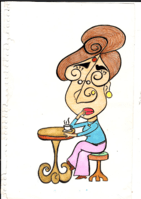
My Love for Music (Or, A Survival Guide in the Age of Sonic Assault)
Let me begin with a confession: I do love music. Deeply. Passionately. Almost spiritually.
Unfortunately, what passes for “music” today seems equally passionate—about causing neurological distress.
Music, to me, is not an activity. It is an atmosphere. It is not something you play; it is something you enter. Or at least, it used to be. Back when sound did not arrive armed with subwoofers and an existential vendetta.
“Silence,” someone once said, “is not the absence of sound, but the presence of everything that matters.”
That was before DJs discovered bass drops.
For me, music has always been a refuge—a coping mechanism finely tuned over years of resisting auditory violence. When life becomes unbearable, I do what any rational person would do: I turn everything off. No playlists. No streaming. No algorithm trying to guess my “vibe” like an overenthusiastic therapist.
Instead, I tune into the original orchestra: wind through leaves, birds conducting territorial negotiations, crickets performing minimalist percussion (the only kind I tolerate), and frogs offering baritone commentary during monsoon evenings.
This is my playlist for life.
No subscriptions required. No advertisements. No one shouting “YO YO” in between.
There was a time—yes, I sound ancient, but accuracy demands it—when Goa had a soundtrack. Not curated, not commercialized, not blasted through speakers large enough to communicate with marine life.
You could hear cows negotiating their existential purpose, pigs expressing mild dissatisfaction, and the occasional motorcycle politely interrupting the conversation. Sound existed, but it did not invade.
Now, we have what I can only describe as “vehicular audio terrorism.”
The modern car is not a mode of transport—it is a mobile acoustic weapon. Step inside, and you are no longer a passenger; you are a hostage. The music doesn’t play; it attacks. It colonizes your ears, occupies your nervous system, and sets up permanent residence in your skull.
At one particularly enlightening moment, I seriously considered exiting a moving vehicle—not out of despair, but out of acoustic self-defense.
“Better the road,” I thought, “than this.”
Of course, the dominant genre in this symphony of suffering deserves special mention. I will be diplomatic and call it “high-decibel linguistic experimentation.” Others might recognize it more specifically.
To me, it resembles an elephant khedda—chaotic, overwhelming, and impossible to escape—except the elephants are beats, and the DJ is the mahout, gleefully driving them straight through your sanity.
“Louder is better,” they say.
“Yes,” I reply, “if the goal is structural damage.”
Now, I am not unreasonable. I am willing to negotiate terms of engagement. If music must exist, let it be unrecorded. Let it breathe. Let it emerge from human hands and human pauses.
Chittibabu’s veena—gentle, intricate, almost apologetic in its beauty.
Ananda Shankar’s sitar—measured, thoughtful, never in a hurry to prove anything.
This is music that does not demand attention; it earns it.
“True art,” as someone wisely put it, “does not shout. It waits.”
Modern sound, however, does not wait. It barges in, rearranges your neurons, and leaves you questioning your will to exist.
And yet, here I am, participating in a blog hop about love for music.
Perhaps this is my love for music—a fiercely guarded, highly selective, slightly hostile affection. Like a cat that chooses exactly two humans and hisses at the rest.
Music helps me cope, yes. By reminding me what to avoid. By teaching me the value of silence. By proving, repeatedly, that not all sound deserves to be heard.
So if you ever see me sitting quietly, eyes closed, listening to nothing in particular—understand this:
I am not escaping life.
I am finally hearing it.
 Parwatisingari's Weblog
Leave a comment