
Plucker Play Repeat.
It arrives without warning — Sourest Day, that annual assault on complacency and taste buds alike. One moment you’re sipping your morning tea; the next, someone’s offering you a lemon wedge “for the spirit of the day.” The world puckers in unison. Cheeks collapse. Tongues revolt. And somewhere, a dentist braces for impact.
“Pucker. Play. Repeat.” It’s the rallying cry of the tangily unhinged.
Children, naturally, are the first to volunteer as tribute. They clutch neon sour candies like Olympic torches, their faces morphing through all seven stages of grief in five seconds flat. Tears? Yes. Laughter? Absolutely. Regret? Brief but intense. One boy, eyes watering, declares proudly, “It’s like electricity for my mouth!” (Correct. Also, mildly concerning.) Childhood, after all, thrives on controlled chaos — and nothing screams adventure like willingly eating something your body labels as a warning.
Teenagers, meanwhile, turn the whole affair into a competitive endurance sport. “Who can handle the most Warheads?” they ask, moments before regretting their life choices. There’s always one philosopher in the group who murmurs, mid-pucker, “It’s not just a taste… it’s a confrontation with mortality.” (Sure, Socrates. Swallow your lemon first.) Of course, Ayurveda would gently raise an eyebrow here: an overindulgence in sour may aggravate Pitta — the fire dosha — which, frankly, explains the teenage temperament.
Adults, ever convinced of their superiority, approach sourness with “refinement.” Lemon vinaigrettes. A hint of tamarind in the dal. Kombucha in mason jars that cost more than their first car. “I prefer subtle acidity,” one remarks, while pretending not to wince. For the adult palate, sourness becomes symbolic — of mindfulness, balance, and the illusion of control. In Ayurvedic terms, Amla rasa (the sour taste) stimulates digestion and focus — perfect for that quarterly meeting where both are in perilously short supply.
And then there are the elders — culinary sages of the tangy arts. Their pickles are both medicine and memory. A spoonful of lemon achar, and suddenly you’re in your grandmother’s kitchen, where every sour note was an act of love (and mild stomach warfare). Sourness for them isn’t about thrill; it’s about connection. Also, practical digestion. (Ayurveda nods approvingly here — finally, someone read the manual.)
But Sourest Day isn’t just a gastronomic circus. It’s also, if you squint, a diagnostic mirror of the human condition. Craving sour things can hint at mineral deficiencies, Vitamin C needs, or — let’s be honest — emotional turbulence disguised as “refreshing beverage preferences.” Translation: if you’ve been squeezing lemons into everything lately, it might not be hydration you’re after. It might be control, dear friend. Or rebellion. Or a desperate attempt to wake up your taste buds after months of metaphorical blandness.
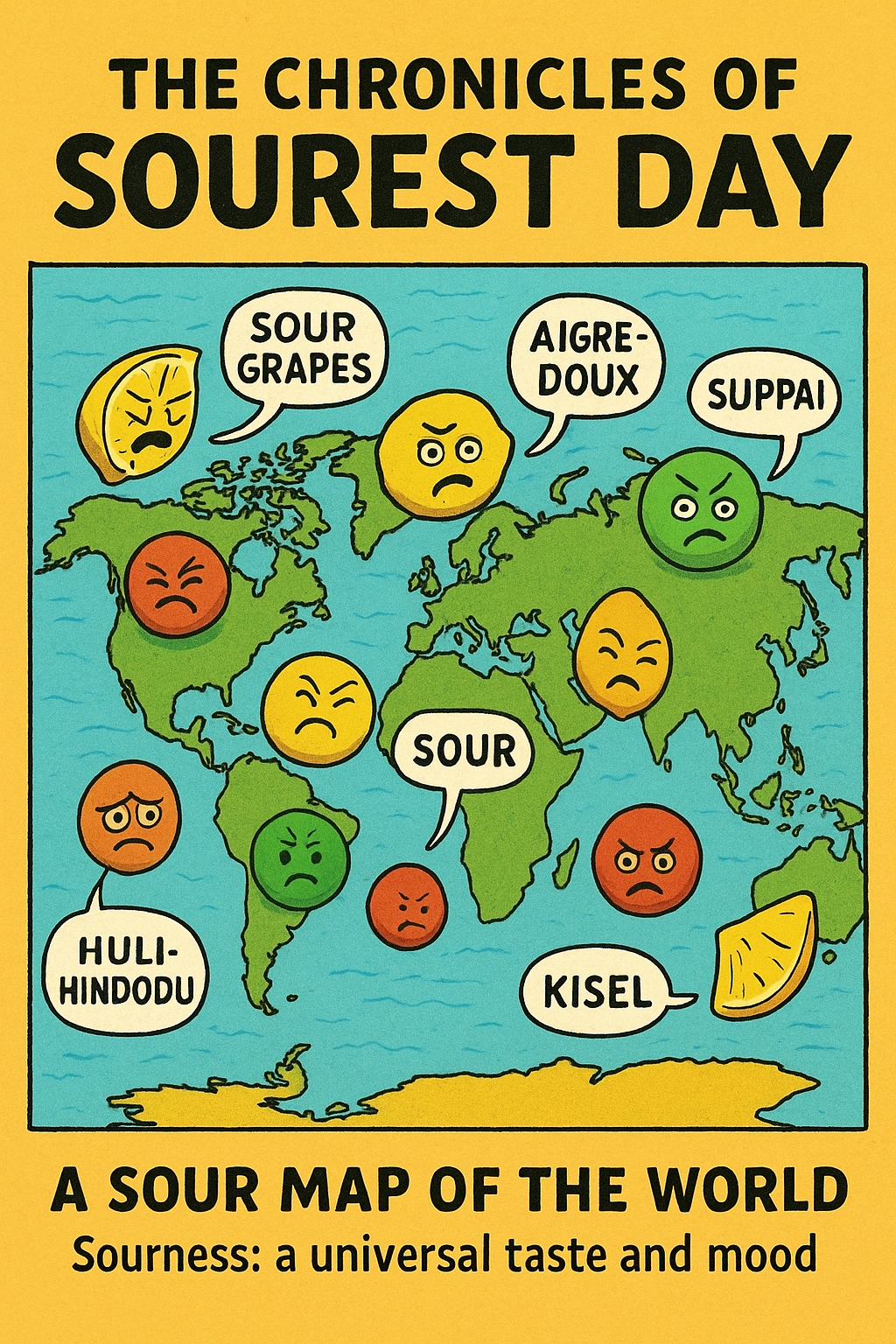
And then there’s the language of sour, which is arguably juicier than the lemons themselves. The world speaks tang in dialects of both delight and doom.
- In Kannada, hulihindodu means “spoiling with sourness” — poetic shorthand for that moment when life goes a bit sideways, like milk left out too long.
- The French, of course, make it sound romantic: aigre-doux, the eternal dance between sharp and sweet.
- The Japanese say suppai, crisp and unapologetic, as if their taste buds have achieved Zen.
- In English, sour goes moralistic: “sour mood,” “sour grapes” — because we never miss a chance to turn flavor into judgment.
- The Russians murmur kisel — a childhood dessert that somehow tastes of both nostalgia and punishment.
Sourness, it seems, is universal shorthand for discomfort we secretly enjoy. It’s the flavor of challenge, of sudden awareness, of realizing your face can fold in on itself.
Nutritionally speaking (because we must justify this holiday to our organs), sour foods bring Vitamin C, probiotics, and digestive stimulation. Emotionally, they bring humility. You can’t eat a lemon slice with dignity. It’s the great equalizer.
And yet, beneath the satire and saliva, there’s something oddly sincere about Sourest Day. It’s the annual reminder that pleasure doesn’t always come sugar-coated. Sometimes it stings first, then blooms — much like truth, love, or realizing your kombucha SCOBY is a sentient being.
As dusk falls and the global tongue recovers, the world shares a collective, slightly acidic smile. Children collapse from laughter. Teens pretend they didn’t cry. Adults sip their fermented teas with performative enlightenment. Elders refill the pickle jar, unbothered and wise.
In every face — from hulihindodu grimace to aigre-doux sigh — we see it: the art of savoring life’s bite. Because what is sour, really, but life reminding you you’re still awake?
So here’s to the tang, the twist, the utterly unnecessary pucker of it all.
Until next Sourest Day,
Your sourly,
The Chronicles of Tang


 Parwatisingari's Weblog
Leave a reply to parwatisingari Cancel reply