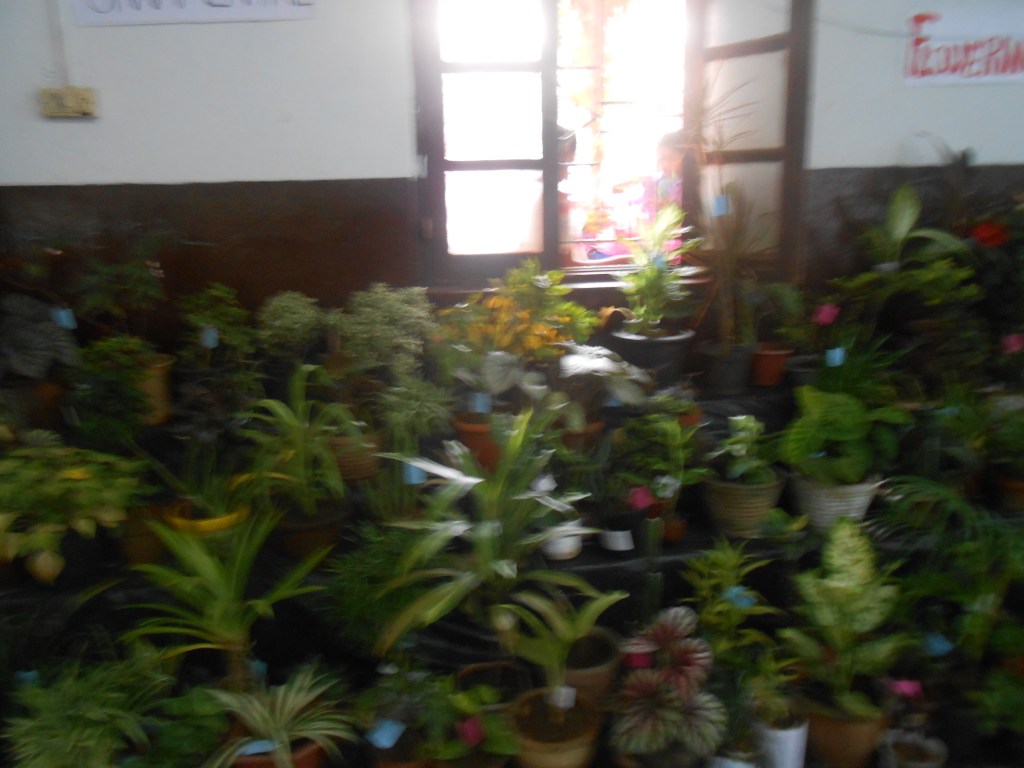
Back at Mango-meadows.
By the time I trudged into Mango-Meadows—our unofficial physicians’ decompression chamber—the sky had the colour and general enthusiasm of cold oatmeal. But inside, the familiar assortment of misfits was already assembled. Chits and Chats were arguing over who had the more traumatic outpatient clinic, Sid was absorbed in something that looked dangerously like optimism, and Sara (Saraswathi) was taking the high moral ground by being annoyed about something nebulous and spiritual.
I sat down, ready to surrender my remaining brain cells to the soft chairs, and the word “plant” began its sinister journey through my consciousness.
Plants, in the living organism sense, are my personal emotional support group. When the day has served me its usual buffet of melodrama, bureaucracy, and medically unnecessary fainting spells, the plants at home greet me by simply existing—something too many of my patients struggle with. They sit there, serene, green, quietly photosynthesising, radiating calm.
“They know too much,” Sara muttered ominously from my left.
She had appeared, as Sara often does, with no warning and a glare that suggested the cosmos had personally offended her. “Plants watch,” she continued. “Always watching. Too quiet. Too still.”
“That’s because they’re plants, not auditors,” I said, but the words lacked conviction. One can never fully argue with someone who invokes supernatural espionage.
The trouble with the word plant, of course, is its identity crisis. No sooner has one relaxed into thoughts of gentle greenery than the mind swerves violently into industrial plants—those hulking warehouses of smoke, noise, and men in fluorescent jackets who look like they have seen too much.
“Oh, industrial plants aren’t so bad,” Sid chimed in, brightening like a man who hasn’t read the news in years. “Professional growth, that.”
Sid is the only person I know who can use the phrase “professional growth” without irony. He looks at a cement factory and sees opportunity; I look at a cement factory and see my soul attempting to escape through my tear ducts.
And then we come to plant, the machinery: loud, oily contraptions with the temperament of a toddler and the noise profile of a riot.
Chits sighed. “Had a patient today who declared he is spiritually aligned with an excavator.”
“Better than his actual personality,” Chats added.
I nodded. Any man who feels kinship with heavy machinery is probably more reliable than half the people I know. At least an excavator doesn’t pretend to be fine and then faint onto your shoe.
But no meaning of plant wreaks such mental havoc as the mole—the secret agent, the infiltrator, the fellow whose entire purpose in life is to lurk. Every thriller insists on inserting one. And once the mind begins down that path, paranoia blossoms like mildew in a monsoon.
I eyed the old gentleman in the corner of Mango-Meadows—the one who always eats peanuts silently and never seems to age. A plant? Sent by a rival hospital? Perhaps his mission is to observe our post-duty decay. If so, he must be dreadfully bored.
Before I could decide which intelligence agency claimed him, the conversation took a darker turn: gifting potted plants.
A crime wave posing as generosity.
People hand you a plant as if they’re bestowing honour, not a responsibility with a 70% mortality rate. Most recipients forget to water the thing until it achieves the crispness of stale papad; others kill it with devotion.
Archana stormed in at this point, vibrating with righteous fury.
“My client,” she declared, collapsing into a chair, “murdered a succulent.”
We gasped appropriately. Murdering a succulent takes commitment. Those things survive desert climates, erratic owners, and the emotional instability of the modern human.
“How?” Sid asked.
“Over-care,” she said, with the solemnity of someone pronouncing a clinical diagnosis. “Drowned the poor thing.”
I shuddered. If plants could write wills, they’d leave everything to cacti.
Then we drifted into the realm of planting something firmly, which humans seem to treat as a competitive sport. My neighbour, for instance, plants himself on his sofa with such unwavering dedication that I suspect future archaeologists will excavate him as part of the original furniture.
And then, like a slow-moving existential fog, the conversation settled on sustainability gardening.
Growing plants for sustainability, we decided, is rooted—not in virtue—but in sheer arrogance. The idea that we, the species responsible for traffic jams, reality TV, and confusing tax regimes, are going to “save the planet” with balcony mint is deeply optimistic.
The planet, which has endured ice ages, meteor strikes, continental drift, and at least three generations of boy bands, is not trembling in gratitude because we grew a tomato.
And kitchen gardening? A vegetable slaughterhouse.
People pluck innocent greens mere seconds after they dare to sprout. No remorse. No trial. Just immediate culinary execution. Sid once claimed his homegrown spinach tasted fresher because it was “cut moments before cooking.” Moments before cooking! The poor vegetable barely had time to understand existence.
By now, Mango-Meadows was buzzing with its usual post-hospital cheer—a combination of fatigue, caffeine, and thinly veiled despair. The fans whirred overhead like elderly helicopters practising retirement hobbies. My friends argued, philosophised, and traumatised one another in the affectionate way only medical professionals can.
And through it all, the word plant danced in my head—botanical, industrial, mechanical, espionage-grade, metaphorical, homicidal, and wholly unreasonable.
But I suppose, after a day of diagnosing, treating, placating, and occasionally resuscitating, it’s comforting that some things—however absurd—simply sit in their pots, mind their own photosynthesis, and never once ask for a medical certificate.
This post is written for blogchatter bloghop

 Parwatisingari's Weblog
Leave a reply to Matheikal Cancel reply