The Manufacture of Souls
Akshara was at the airport, which is to say he was in purgatory with better lighting. Gate 24 blinked its indifference above him. Around him, humanity queued in alphabetical surrender. Boarding groups were announced with the solemnity of karmic reallocation.
He was wool-gathering. Which, in his profession, passed for research.
Until the Himalayan writing retreat, Akshara had never believed in manufacturing characters. Narratives, yes. Plots, occasionally. Characters simply appeared—like fungus after rain—fully formed, inconvenient, and faintly accusatory. They spoke, misbehaved, and left readers to judge them while Akshara pretended to be their biographer.
At the retreat, however, someone had uttered the phrase “character architecture.” The word architecture implied load-bearing beams. Compliance. Structural integrity. Suddenly the gods were in the building code business.
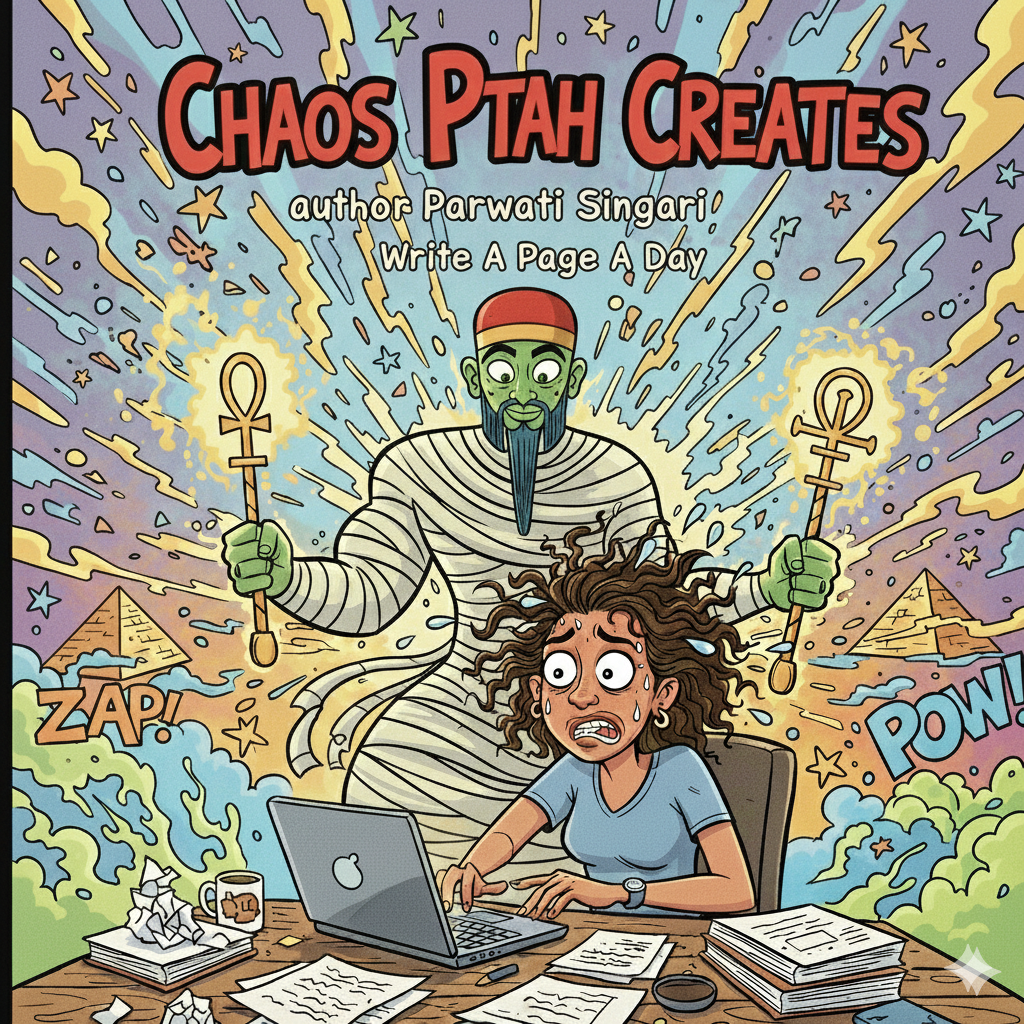
Ptah materialized in the empty airport seat beside him, wearing noise-cancelling headphones that emitted no sound. “You’ve been improvising,” he said, in the tone of a deity auditing receipts.
“I call it organic emergence,” Akshara replied without moving his lips.
“Negligence,” Ptah corrected.
For the first time in his writing life, Akshara had tried to build a character deliberately. Not merely observe one erupt from the narrative soil, but assemble one from components. The responsibility had felt indecent. It was one thing to record a person’s downfall; quite another to engineer their appetite.
He began, as always, with the visible. The image came first. Shoes. The crease of trousers. A sari pinned with defiance. The way a shoulder dipped under invisible history. Clothes suggested class aspiration or strategic surrender. From fabric came gait. From gait came diet. From diet came music. Before long, his fictional people resembled his real acquaintances with suspicious precision.
“Careful,” said Saraswathi, appearing across the aisle with a boarding pass tucked into a manuscript. “Defamation is not a literary device.”
“I change the names,” Akshara muttered internally.
“You keep the grudges,” she replied sweetly.
He had once believed that naming a character—assigning age, sex, and temperament—was sufficient initiation. Give them a situation, apply pressure, observe combustion. Conflict was king.
“Conflict is a symptom,” Ptah said. “Desire is the pathology.”
The airport provided case studies. A businessman hovered at the counter, desiring an upgrade with the moral urgency of a crusade. A child desired the window seat as if oxygen were allocated by altitude. An elderly couple desired predictability, which the departure board denied with theatrical pleasure.
“What do they want?” Ptah asked.
Akshara resented the question because it was efficient.
At the retreat, he had been told that characters were engines of desire. Not collections of quirks. Not decorative trauma. Desire generated motion; obstruction generated plot.
Saraswathi leaned forward. “You romanticize conflict because it absolves you. You throw stones at them and call it narrative tension.”
“I prefer the term catalytic adversity.”
“You prefer avoidance,” she said.
So Akshara constructed a grid in his mind, as if immigration were processing fictional souls.
What does the character want?
What are their flaws? (Virtue was suspicious; it implied laziness.)
Where are they from—geographically and emotionally?
Where are they going?
What can they do to surprise the author?
That last question troubled him. Historically, his stories had surprised him by mutiny. He would begin with devotion and end in tax evasion. He would aim for tragedy and land in satire. The narrative refused obedience. He had called this magic.
Ptah called it lack of oversight.
At Gate 24, boarding Group A rose with entitlement calibrated to platinum cards. Group C remained seated, practicing philosophical acceptance. Akshara observed them as potential drafts. The woman clutching her boarding pass like a verdict. The man hoarding expired tags in his pocket, unable to discard proof of departure.
“Fifteen minutes,” Ptah reminded him, invoking the timed exercise from the retreat. In fifteen minutes, Akshara had once sketched a man who collected old boarding passes because he could not accept arrivals without commemorating exits. He had thought it clever.
“It was almost honest,” Saraswathi amended.
The airport loudspeaker crackled with final calls. Nothing exposes desire like imminent departure. Every traveler at Gate 24 wanted something—status, reunion, escape, absolution. Their conflicts were merely the friction between longing and logistics.
Akshara realized, with reluctant clarity, that creating a character was not divine play. It was fiduciary duty. One did not simply assign suffering for aesthetic symmetry. One had to justify the hunger that produced it.
“Board,” Ptah instructed.
“For the flight?” Akshara asked.
“For the discipline,” Saraswathi replied.
Gate 24 swallowed passengers in orderly despair. Akshara remained seated a moment longer, assembling souls with greater caution than cabin luggage. The airport had clarified the matter: everyone was in transit, including his characters. The question was no longer how they suffered.
It was what they desired strongly enough to declare at the counter of fate—and what fee they were willing to pay when called to board.
 Parwatisingari's Weblog
Leave a comment