Retrieving Day 22
The Donkey Who Audited Glory (Unknowingly)
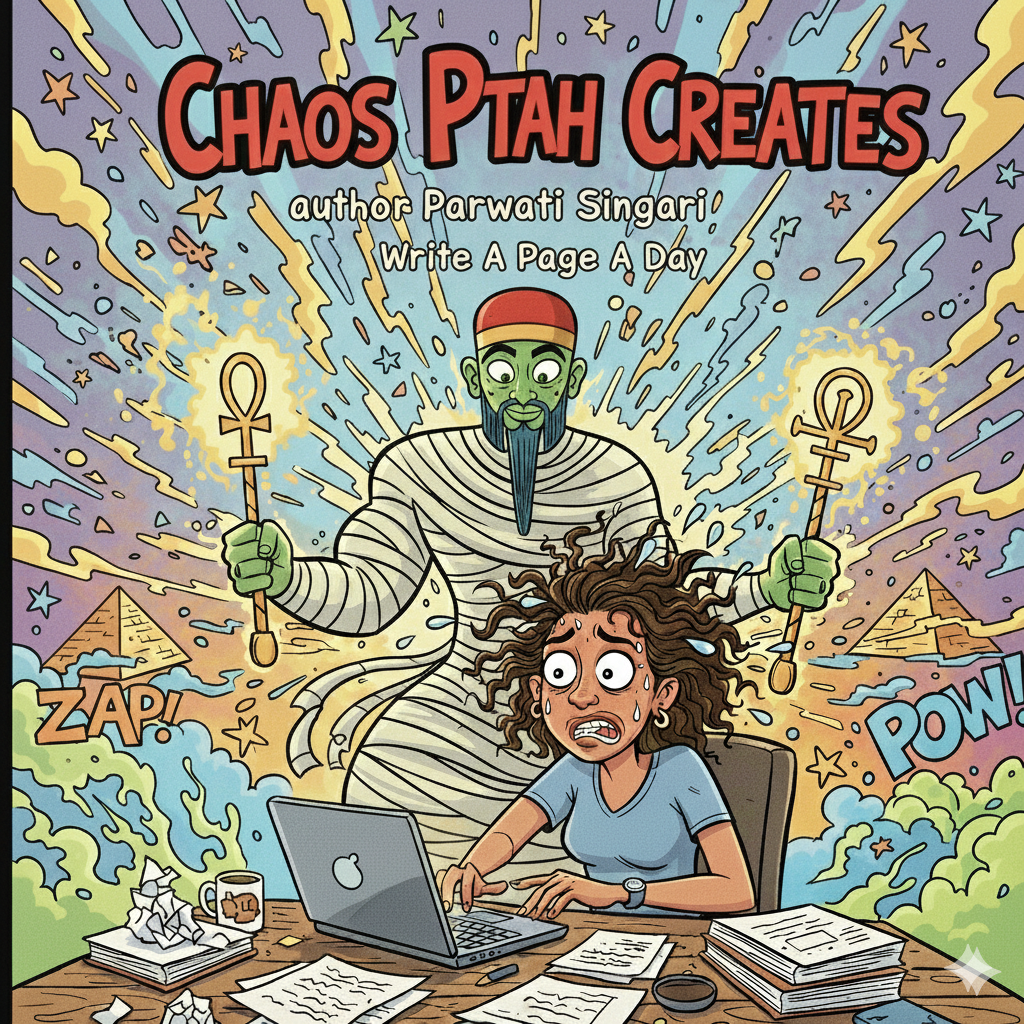
Ptah insisted this story had already been written.
“Of course it has,” Akshara muttered. “Every story has already been written. That’s the problem.”
“Not by you,” Ptah replied. “And certainly not with ledgers.”
So Akshara began again.
In the market square—half spice, half speculation—two donkeys were tied to the same sun-bleached post. One carried Nasruddin Hodja and an empty basket. The other wore a ribbon that suggested either promotion or delusion.
The first donkey brayed with theatrical exhaustion.
“I am collapsing under metaphysical inventory,” he announced. “Nasruddin insists this basket is full of ‘conceptual surplus.’ It contains nothing. And yet he claims nothing weighs more than gold. My spine is now a philosophical argument.”
“Good,” Ptah murmured. “Make the burden abstract. Readers love symbolic suffering.”
Akshara frowned but continued.
The second donkey sniffed. “You complain of nothing? I have carried history.”
“History?” the first donkey scoffed. “You can barely carry hay.”
The ribboned donkey straightened. “I once bore a carpenter from Bethlehem.”
Ptah interrupted. “Name him.”
“No,” Akshara said. “Too heavy-handed.”
“Precision is not heavy-handed,” Ptah replied. “It is craftsmanship.”
Akshara sighed and complied.
“Yes,” the second donkey continued, “a carpenter from Bethlehem—Jesus Christ himself. When we entered the city, they laid palm leaves before us. Palm leaves! Do you know what that does for one’s self-esteem?”
The first donkey blinked. “Palm leaves? For carpentry?”
“For salvation,” the second corrected smugly. “But transport is integral to impact. Without logistics, there is no legacy.”
Ptah chuckled. “Now we are speaking of civilization.”
At that moment, Nasruddin approached, adjusting his turban with managerial concern.
“Why are you braying?” he asked the first donkey.
“I am carrying nothing,” the donkey replied tragically.
Nasruddin turned to the gathering villagers. “Observe,” he declared, “the paradox of the empty basket. It contains no grain, no figs, no coin. Therefore it must contain expectation. Expectation outweighs all commodities.”
The villagers nodded the way shareholders nod during incomprehensible presentations.
Akshara paused. “Too modern?”
“Leave it,” Ptah said. “Markets are eternal.”
Meanwhile, the second donkey basked in attention.
“They once celebrated me,” he announced to a cluster of listeners. “Palm leaves. Hosannas. Urban planning paused.”
Nasruddin raised an eyebrow. “And whom did you carry?”
“A carpenter of destiny.”
Nasruddin leaned toward the villagers. “My friends, the leaves were not for the donkey.”
The crowd murmured.
“They were for the man he carried. The beast mistook adjacency for authorship.”
Ptah clapped softly in Akshara’s mind. “There. That’s your thesis.”
But Akshara was not finished.
The first donkey, still groaning, spoke again. “At least my burden is honest. It is visibly empty. I do not confuse myself with the contents.”
The second donkey bristled. “History remembers me.”
“History invoices you,” the first corrected. “And marks you as ‘transport.’”
Nasruddin scratched his beard. “Both of you misunderstand. One resents an invisible load. The other claims credit for a visible miracle. Neither has audited his own role.”
He lifted the empty basket dramatically. “This carries responsibility. Not because it holds the universe—but because I say it does. Meaning, like cargo, is assigned.”
The villagers dispersed, satisfied by the performance of wisdom.
Ptah went quiet.
Akshara looked at the two retreating donkeys—one lamenting nothingness, the other glowing with borrowed radiance.
“So,” Ptah prompted, “what is this really about?”
Akshara answered carefully.
“It’s about intermediaries. About how carriers confuse proximity with greatness. About how we groan under empty projects yet preen over reflected light.”
“And?” Ptah pressed.
“And about writers,” Akshara admitted. “We carry myths, gods, prophets, traders. Sometimes we think the applause is for us.”
Ptah’s voice softened.
“The applause is never for the donkey. But without the donkey, the procession stalls.”
In the distance, the first donkey brayed at the unbearable weight of nothing. The second adjusted his ribbon, certain history owed him royalties.
Nasruddin walked between them, smiling at the arithmetic of ego.
Akshara stopped writing.
Ptah did not interfere this time.
For once, the ledger balanced on its own.
 Parwatisingari's Weblog
Leave a comment