Undercover Disruptor Of War
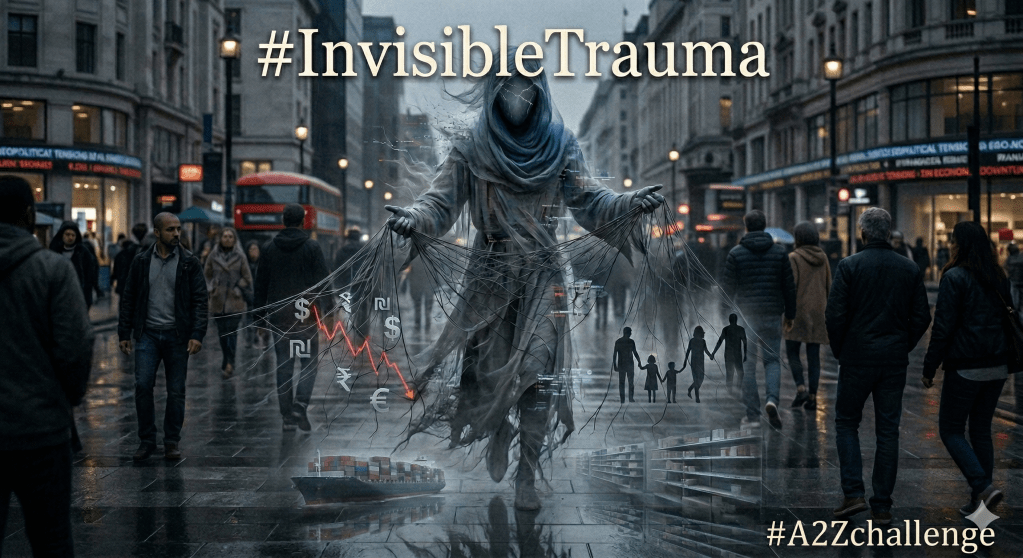
I have often felt that unemployment does not arrive as an event; it seeps in like dampness. By the time you notice it, the walls have already changed colour. In a clinic, it rarely introduces itself directly. It comes wearing other disguises—irritability, missed medications, chronic fatigue, a vague sense that something is not quite right but cannot be named. Over time, you begin to recognise the pattern. This is not just illness. This is economic distress made biological.
What interests me, and increasingly worries me, is what this does not just to individuals, but to society as a whole. Because when employment becomes uncertain, behaviour begins to reorganise itself around survival. And survival is efficient, but not always ethical, not always healthy, and rarely long-term in its thinking.
There is a noticeable shift toward what I can only call paycheck pragmatism—a mindset that says, “If it pays, I take it.” Not out of greed, but out of compression of choice. When stability disappears, decision-making horizons shrink. People stop asking, “Is this good for me?” and start asking, “Will this get me through the month?” It is a rational adaptation, but it carries consequences. Work becomes transactional, identity fragments, and the idea of purpose quietly exits the room.
Alongside this comes hypervigilance. I see it clinically as poor sleep, exaggerated startle responses, constant checking—of news, of finances, of possibilities. It is the mind trying to stay one step ahead of uncertainty. In war zones, we recognise this as a response to threat. In economic crises, it wears a more respectable disguise, but the physiology is remarkably similar. Cortisol does not care whether the danger is a missile or a missed salary.
Now, the uncomfortable question: does unemployment increase crime? The answer, inconveniently, is not a simple yes—but neither is it a no. What we do see, consistently across settings, is an increase in petty crime, informal economies, and grey-zone activities—the kind that sit just outside legality but firmly within necessity. Theft, small fraud, black-market trading—these often rise not because morality collapses, but because options do.
More importantly, there is a shift in moral calibration. Actions once considered unacceptable begin to feel negotiable. When the alternative is hunger or debt, the line between right and wrong becomes… flexible. It is less a descent into criminality and more a redefinition of survival.
At the same time, communities become paradoxical. On one hand, you see increased solidarity—families pooling resources, neighbours helping each other, informal support systems emerging where formal ones have failed. On the other, there is growing distrust. Competition for limited opportunities breeds quiet suspicion. People watch each other more closely. Not out of malice, but out of necessity.
In the clinic, this duality is striking. The same patient who shares medicines with a neighbour may also delay their own treatment because they cannot afford both generosity and self-care. Altruism and anxiety coexist, often uncomfortably.
The impact on mental health is cumulative rather than dramatic. It builds slowly—persistent anxiety, low-grade depression, irritability that strains relationships, and a pervasive sense of loss of control. Children, as always, absorb this silently. They may not understand unemployment, but they understand tension, shortened tempers, and the absence of certainty. Their world becomes smaller, more cautious.
And then there is identity. We underestimate how much of a person’s sense of self is tied to what they do. Remove stable work, and you do not just remove income—you unsettle purpose, routine, and social standing. Over time, this erodes confidence, leading to withdrawal or, conversely, riskier behaviour in an attempt to regain footing.
What emerges, in the end, is not chaos, but adaptation under constraint. Society does not collapse; it bends. But in that bending, it becomes something else—more guarded, more transactional, more short-term in its thinking.
There is a certain dark irony here. We often speak of rebuilding economies after conflict, as though restarting engines. But what we are really dealing with is something far more complex: rewiring human behaviour after prolonged uncertainty.
And that, unlike infrastructure, does not respond well to quick fixes.
So yes, unemployment does more than empty wallets. It reshapes choices, morality, and mental states. It teaches people to live narrowly, think defensively, and act immediately. It keeps them alert, sometimes excessively so. It nudges them toward whatever offers a paycheck, regardless of long-term cost.
In clinical terms, it is not an acute condition.
It is a chronic one—with societal side effects we are only beginning to fully understand.
This Post is written for #A2Zchallenge By @Blogchatter


Leave a Reply