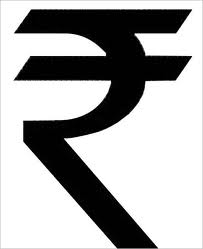
The curious case of The Rs.2000/-
The Curious Case of the ₹2,000 Note
No amount of kicking seemed capable of bringing the scooter back to life.
I kicked it once. Twice. Then several times, with the optimism of someone who believes machinery, like children, occasionally responds to persistence.
It didn’t.
That was when Amma told me I might as well take an auto.
Of course, breakfast came with its own commentary.
“If only you had a four-wheeler licence, things would have been so much easier.”
I have always suspected that this is precisely why I never got a four-wheeler licence. Some forms of encouragement are so persistent that one develops an instinctive resistance to the activity being encouraged.
My brother Anantha had resisted learning to ride a bicycle before me. Amma had demanded three good reasons why he did not want to learn.
Three.
I don’t remember his first two.
I am fairly certain the third was Amma.
Anyway, the scooter was dead and I had a list of things to do. The first stop was the ATM.
“Don’t waste your time. I have some cash. Take it,” Amma said.
I should perhaps have asked what kind of cash.
I didn’t.
The auto driver who arrived was amazing.
He had completely metamorphosed his auto.
For starters, it was electric. Then there was a portable fan, which he proudly told me he had bought on Amazon. He charged it at night and, if needed during the day, had a power bank in the auto.
There was a charging point for passengers.
A water dispenser with disposable glasses.
And, of course, a music system blaring Tulu rap.
I had only ever seen this sort of “executive auto” in an ixigo April Fool’s advertisement. This man had actually built one.
Temple done, the auto driver was to drop me at Ganapati Anna’s place. Ganapati Anna was a mentor, an oracle, and one of those people to whom you can take a problem without first explaining why it is a problem.
At the end of the journey, I took out the money Amma had given me.
A ₹2,000 note.
I handed it to him.
He looked at the note.
Then at me.
Then at the note again.
It was a look containing pity, suspicion and the faint suggestion that perhaps I was trying to con him.
I suddenly became very conscious of the note in my hand.
For one horrible moment I wanted to explain everything.
“My mother gave it to me.”
“I haven’t forged it.”
“I don’t know where she got it.”
“It is actually legal tender.”
The more explanations I constructed, the guiltier I sounded.
So I said nothing.
I stood there feeling like a schoolgirl caught with a stolen examination paper.
Eventually he accepted it, but his expression did not change.
I paid him and went inside to meet Ganapati Anna.
When our conversation and consultation were over, I mentioned the strange encounter with the ₹2,000 note.
Ganapati Anna smiled.
When I got home, I discovered that Amma had eleven more such notes.
Eleven.
The scooter came back to life the next day, and I decided to take one of the notes to the bank.
By then, of course, the ₹2,000 note was no longer being accepted at ordinary bank branches. The Reserve Bank had withdrawn the exchange and deposit facility through bank branches on October 7, 2023.
I went to Syndicate Bank—now Canara Bank—and showed the manager the note.
He looked at it.
Then at me.
There was pity in his eyes.
Not the same pity as the auto driver.
This was more sophisticated.
The expression seemed to say, “I understand that you have been placed in an embarrassing situation, and I shall permit you to save face.”
When I told him my mother had given it to me, he clearly did not believe me.
Or perhaps he believed me in the way one politely believes an elderly woman’s daughter.
He told me the bank could not take the note.
I would have to go to the Reserve Bank.
That was it.
No suggestion of an alternative. No mention that the notes could be sent to the RBI through India Post.
I went home and Googled the RBI procedure.
That was when the adventure really began.
The procedure was so confusing that simply getting into the Reserve Bank sounded like an undertaking.
Security.
Identification.
Aadhaar.
Entry protocols.
Forms.
Details.
Restrictions.
I had the distinct feeling that before they agreed to look at my ₹2,000 note, I would first have to establish that I was a legitimate human being who had somehow acquired a legitimate piece of currency that nobody wanted.
And that, really, was the absurdity of it.
A banknote is a document of acknowledgement.
It represents value.
It represents trust.
I accept it from you because I trust that someone else will accept it from me.
Its usefulness lies in its circulation.
But here was a perfectly genuine ₹2,000 note with value that was becoming increasingly difficult to circulate.
It had value.
It simply wasn’t useful to me.
I put the matter aside.
About a month later, Ganapati Anna forwarded me a press clipping about a place called Sri Venkateswara Silks in Badagupete, Udupi.
Once upon a time, Badagupete had been the centre of saree and jewellery shopping in Udupi.
The road connected the maseedi, the mosque, with the commercial area and went towards Rathabeedi, the temple square.
The directions in the clipping were wonderfully old-fashioned.
Turn at the maseedi.
Go towards Badagupete.
Before you reach Badagupete, you will see Naveen Fancy Store.
I remembered it.
There used to be Pandya’s Saree Shop there, and a glass cutter nearby. After saree shopping, we would visit the Pandya family in their ancestral home behind the shop.
And there would be masala tea.
In those days, masala tea itself was a novelty.
The Pandya shop was gone now. The sleepy old shop had disappeared, along with the ancestral house behind it.
The town had moved on.
Old houses had been rebuilt into ugly commercial buildings. A cattle shed had become an eatery—the sort of place Bangaloreans would call a darshini.
Then I spotted Naveen Fancy Store.
Opposite Naveen was a building with the veneer of fly-by-night prosperity.
It wasn’t exactly prosperous.
It merely looked as though prosperity had passed by, waved politely and decided not to enter.
If I had been a little plumper, I would have had to negotiate the staircase horizontally.
On either side were jazzy silk sarees.
There were a couple of beedis tucked into a corner.
At the landing was Sri Lakshmi Investors.
Next to it was the Moneylenders’ Association.
I entered Sri Lakshmi Investors.
The man behind the counter gave me a once-over.
His look was the look of a Shylock waiting for his pound of flesh.
Or perhaps the contemporary version—the look of a loan recovery agent wondering which EMI I had skipped.
I gingerly asked in Tulu:
“Pale raddu savira note gopparatta?”
Was this the place where the ₹2,000 note could be redeemed?
Perhaps it was the Tulu.
Perhaps it was because anyone still carrying ₹2,000 notes in Udupi was assumed to have arrived from the land of Uncle Sam.
Whatever the reason, he immediately pointed me towards the shop next door.
Sri Venkateswara Silks.
I entered.
The man behind the counter was definitely better dressed.
A crisp white shirt.
Grey trousers with the faint sheen of silk.
Well-oiled hair.
Fresh mint breath.
Behind him was an altar with Lord Venkateshwara in the centre, flanked by Lakshmi. In front stood a resplendent image of Lakshmi in a distinctly Tamil style.
To his right was the galla petti—the cash box.
I prefer to call it Kuberana Mane.
Kubera, after all, is the treasurer of the gods.
He is also, according to the Tirupati story, the unfortunate financier who lent Vishnu money for his marriage to Lakshmi.
Every time you go to Tirupati and make a donation, you are, in some small way, helping Vishnu clear that outstanding loan.
I looked at the man.
He looked at me.
“Kya?”
Something about his accent and the décor told me that Tamil might be the more productive language for this negotiation.
“Kannada? Tamil?” I asked hesitantly.
His entire face changed.
The smile widened and reached his eyes.
“Tamizh amma. Kannada varum.”
“Saaree kudukkanumaa?” he asked.
He assumed I had come to dispose of sarees.
“No, no. ₹2,000 notes.”
I explained that my mother had them.
He nodded understandingly.
Then came the sentence I had already heard enough times to begin resenting it.
“After age, forgetting happens.”
He would have been astonished if he had ever met Amma.
She doesn’t forget.
She remembers things the rest of us have forgotten we ever did.
I explained that she could not come personally.
“How do we do the transaction?”
“Don’t worry, amma.”
The transaction, it turned out, was remarkably simple.
He would give me ₹1,000 for every ₹2,000 note, provided the note was dated before 2018.
Anything after 2018, he said, was not accepted.
Those notes were presumed Pakistani.
I called my cousins, who were dealing with similar problems.
Within the hour, the man had amassed nearly ₹50,000 worth of these troublesome notes.
I stood there watching the proceedings and began to wonder whether I was the one being taken for a ride.
Was this legal?
Was I losing money?
Was he making money?
Why wasn’t he asking for Aadhaar?
Why wasn’t there a form?
Why was there no photograph, signature or official stamp?
After all the terror of trying to navigate the Reserve Bank, I had arrived at a slightly seedy building in Badagupete and found a man who would simply take my notes and give me cash.
The difference was that he wasn’t doing it for nothing.
On Amma’s notes alone, he made a neat ₹6,000.
Suddenly, the pitying looks I had received from the auto driver and the bank manager seemed almost justified.
But then something else occurred to me.
The man I had first judged as sleazy was, in fact, doing something useful.
He was taking things that had become difficult to use and putting them back into circulation.
Old currency.
Old silk sarees.
Old zari.
Old steel vessels.
Perhaps that was his real business.
Not buying old things.
Putting value back into circulation.
The whole situation was like a watermelon—messy, inconvenient and difficult to manage, but at the end of the day, worth it.
And somewhere along the way, the story stopped being about the ₹2,000 note.
Later, sitting over coffee at Rambhavan, I found myself wondering how many things we hold on to because they are technically valuable but practically difficult to use.
Objects.
Skills.
Ideas.
Relationships.
Old identities.
Old stories.
Even old grudges.
Things that once had enormous value, but which we have carried for so long that we have forgotten how to put them back into circulation.
The ₹2,000 note wasn’t worthless.
It was simply inconvenient.
And perhaps that is the problem with some of the things we carry through life.
They still have value.
They just aren’t circulating anymore.
¹ A useful postscript if you are holding ₹2,000 notes: don’t make the journey I did. The RBI permits individuals within India to send ₹2,000 banknotes through India Post to an RBI Issue Office for credit to their bank account, subject to the prescribed procedure, identity requirements and due diligence.
² This post was written for the Blogchatter Blog Hop.


 Parwatisingari's Weblog
Leave a comment