About Ancestors and Descendents.
Yesterday was “Ask a Stupid Question Day.”
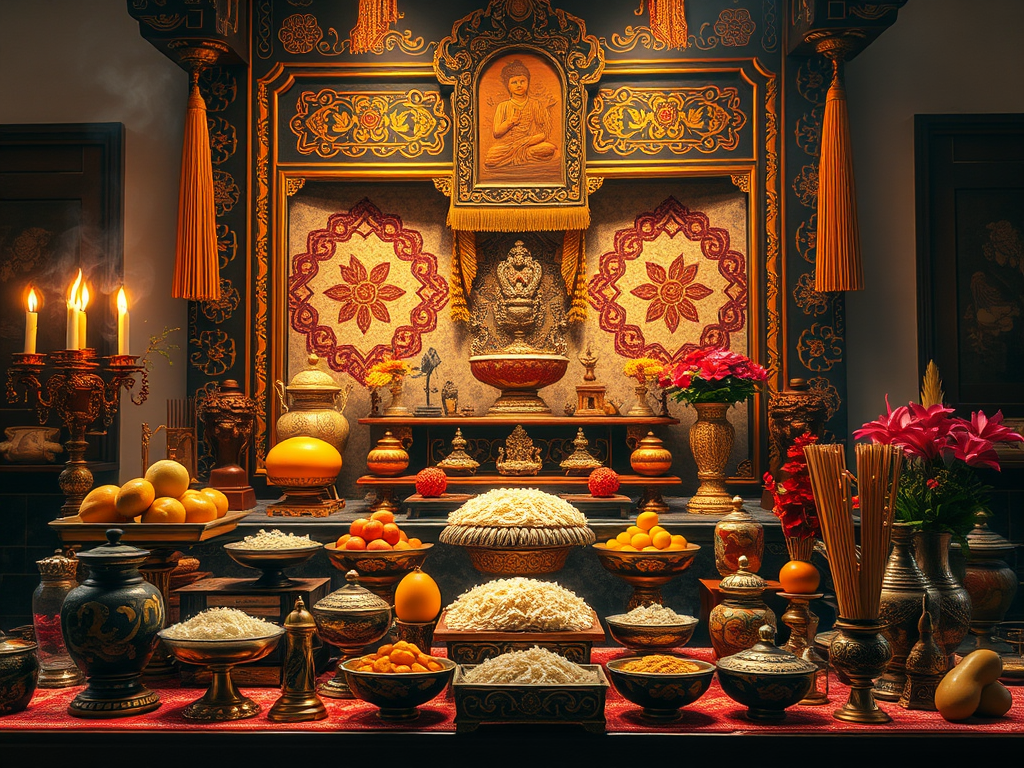
Naturally, while the rest of the world was probably debating over their morning tea whether a tomato belongs in a fruit salad, my mind wandered off into rather peculiar territory. I found myself thinking about Pitrupaksha, the venerable terror called pitrudosha, and the strange business of why we turn out the way we do.
For those of us comfortably parked in our fifties and sixties, life has a rather wicked sense of circular humor.
Thirty years ago, we watched our parents fuss over crows on the balcony, mutter dark warnings about displeased forebears, and whisper about pitrudosha whenever the family scooter refused to start or a marriage proposal fell through. Back then, being modern, sensible folk with brand-new degrees, we rolled our eyes.
Fast forward to today, and we are rolling our eyes all over again. Only this time, it is at our twenty-something children. They wouldn’t dream of feeding a crow, of course, but they will happily pay an enormous fee to a young woman in linen trousers to help them “heal their ancestral trauma” through guided somatic breathing.
The crow on the balcony has simply been replaced by a wellness podcast on Spotify. Full circle, as they say.
Now, science—which usually arrives fifty years late to explain what grandmothers already knew—has decided to call this epigenetics. Laboratory researchers, who are very serious people with clipboards, discovered that mice conditioned to fear the smell of cherry blossoms actually passed that very same fear down to their children and grandchildren, even though the little ones had never sniffed a blossom in their lives.
Which brings me to my stupid question:
Are your choices actually your choices?
Consider someone like Asha. Wonderfully capable woman. Runs her affairs smartly, pays every bill with precision, never starves, never borrows. Yet her bank balance maintains a stubborn, almost spiritual commitment to breaking even. Whenever modest wealth peeks through the door, an unexpected emergency politely shows up to carry it away.
She eventually uncovered an ancestor whose life had been violently flattened by sudden ruin. For him, wanting more was not merely vulgar; it was dangerous. Humility was camouflage. Staying poor meant staying safe. The gentleman died decades ago, but his terror remained as a permanent, invisible tenant in the family nervous system. Long after everyone forgot his face, everyone was still obeying his anxiety.
Then there is Naveen, who spent half his adult life convinced he had the midas touch in reverse. An astrologer solemnly declared pitrudosha, sent him off to two seaside temples, and made him perform rituals with black sesame seeds.
Naveen returned, dusted his hands, and things miraculously began to improve.
Did the departed elders in heaven sign a no-objection certificate? Or did the sheer theatricality of the ritual finally convince Naveen’s subconscious mind that the invisible debt had been settled? For the first time in years, his shoulders dropped. He stopped behaving like an accident waiting to happen, looked the world in the eye, and made bolder bets.
Call it ritual. Call it faith. Call it neurobiology, or mouse-and-blossom genetics. The label matters very little over morning toast.
What matters is that a very large portion of what we solemnly call our “destiny” is merely an antique survival trick that has outstayed its welcome.
We don’t just inherit our grandmother’s fine nose or our uncle’s tendency to lose his temper before breakfast. We inherit invisible household rules:
- That taking a holiday on a Tuesday is a mortal sin.
- That admitting you are drowning is a sign of bad character.
- That a person’s worth is strictly measured by their rank, their salary, and the quiet endurance of misery.
This is where the matter stops being amusing and becomes rather serious—especially for the younger crowd trying to navigate modern pressure.
When life backs a young person into a corner, when the panic sets in and the silence becomes heavy, they assume the despair belongs entirely to them. They believe they are personally broken.
That is precisely when one must pull out the stupid question:
“Wait a moment. Is this feeling even mine?”
Is this panic mine, or did I inherit it from a grandfather who lost his shop in 1965?
Is this unbearable guilt mine, or is it an heirloom passed down because nobody in three generations had permission to speak up?
The moment you separate yourself from the family script, a little breathing room opens up. Inside that space, you realize an essential truth: you can love your ancestors dearly without feeling obliged to bleed from their exact same wounds.
Maybe that is what remembering them ought to be. Not blind terror of their displeasure, and not smug dismissal of their struggles either.
Just a polite, respectful nod across time: Thank you for the grit, thank you for the life, and thank you for surviving. But the fear you had to carry to stay alive? That, I am leaving right here.


Leave a Reply