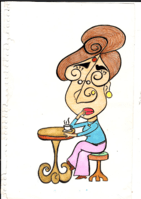
A birthday, once you cross into the foothills of midlife, is no longer an excuse for blowing out pink candles while sporting a paper crown and pretending to like everyone in the room. It ceases to be an exercise in loud confectionery and photographic fraud. It becomes, instead, what my late, lamented friend Busybee might have enjoyed from an armchair: a quiet session on the balcony—just you, a generous peg of single malt, and the sudden, devastating realization that your tolerance for humbug has dropped to zero.
It turns out today is officially celebrated as “It’s My Party Day”—a whimsical excuse of an occasion, but an instructive one. My mind drifted straight to young Lesley Gore. When she belted out It’s My Party (and I’ll cry if I want to) back in 1963, people dismissed it as teenage hysteria over some twerp named Johnny running off with Judy. Poor Lesley was done an injustice. Beneath the beehive hairdo and the teenage sulk lay the purest declaration of constitutional sovereignty ever set to three-chord pop.
It is my lakkada—my own loud, chaotic affair. If I wish to laugh like a hyena, I laugh. If I want to bawl my eyes out into the upholstery, no well-meaning auntie has the right to thrust a hanky into my hand and urge me to look on the bright side. If I decide halfway through the evening that I despise the guest list, out they go. At this age, you finally discover the great cosmic secret: authenticity is not an audition for polite society; it is simply granting yourself permission to stop lying for the sake of the neighbours.
If I were to host this birthday party properly, I would not waste good money popping cheap bubbly. I would begin with a funeral.
A quiet, dry-eyed cremation for the ridiculous ghosts I have carted around like excess baggage. First onto the pyre would go the pathetic, eager-to-please child who imagined she had to pay rent for the air she breathed. Right beside her, I’d toss the frantic young idiot who mistook neurotic perfectionism and a manicured reputation for personal worth. And on top of the pile goes the weary adult who carried a sack full of Catholic guilt for every botched romance, wrong turning, and half-baked enterprise.
Good God, the sheer number of years I wasted playing the agreeable nonentity—making myself as tasteless and unobtrusive as boiled hospital rice so no one would be offended. She did her bit, poor wretch. Let the pandit chant the mantras and scatter the ashes. May she never bother me again.
Next would come a toast to the ancestors—though certainly not the pious, incense-scented nonsense peddled by moralists.
I’m talking about a stiff drink raised to the rascals, the rebels, and the plodders. To the ones scowling from dust-coated sepia frames, and to the prehistoric millions whose names are lost to time, but whose bad tempers, chronic digestions, and unfulfilled lusts are still swimming merrily through my bloodstream. They were thoroughly flawed, disreputable creatures, every one of them. They dropped the baton, cursed in the dark, tripped over their own dhotis, and yet somehow managed to hand life forward. Because those stubborn blighters survived, I am sitting here pouring myself another round.
Then, an empty chair would be reserved for the woman who hasn’t quite arrived yet.
The future self. She has been tapping me on the skull for forty years, largely by arranging for me to fall flat on my face. Grand triumphs are utterly useless; they only turn people into insufferable, pompous bores who write self-help books. A resounding, knee-scraping failure, however, is a magnificent educator. It forces you to sit down in the dirt and pay attention. Every scar is a footnote; every humiliation, a cut-price lecture in human folly.
Which brings me to Psalm 131. Theologians love to coat it in treacle, but the psalmist was merely a sensible fellow with no appetite for ulcers. He talks of a soul quieted like a weaned child resting against its mother. He basically says: stop puffing your chest out, stop trying to govern the rotation of the earth, and stop pretending you have a direct hotline to Providence.
Giving up is merely bad temper—the petulant grumble that nothing matters. Letting go is civilized sanity—the polite acknowledgement that the universe is considerably larger than your petty weekly planner. Surrender isn’t defeat; it is merely an apology for having behaved like an arrogant ass.
The Japanese, whose cynical elegance I have always envied, call this wabi-sabi. The aesthetic of chipped crockery. When an antique tea bowl cracks, they don’t bin it or hide the blemish under a doily; they repair the fracture with gold lacquer. The fault-line becomes the boast of the piece.
We spend the first half of our lives applying layers of mental plaster and social paint, terrified that the world will notice we are cracked pots. What utter rot. The cracks are the only interesting parts about us; they are where the light finally gets in, and where the hot air escapes.
So on this “It’s My Party Day,” the rules of the house are simple.
There will be sharp laughter, and quite possibly a puddle of tears. There will be vicious gossip, comfortable silence, fond memories of dead rogues, and scandalous stretches of sitting under an old banyan tree doing absolutely nothing productive whatsoever.
Life is not a damn entrance exam to be cleared with ninety percent marks before the bell tolls. It is just an evening party—scruffy, loud, imperfect, and vastly entertaining.
And if Lesley Gore and I choose to sit in the corner and weep into our tumblers, nobody need take it personally. It is, after all, my party.


Leave a Reply