I’ve tasted stale bread soaked in lukewarm tap water because the checking account was overdrawn and payday was four days away. It’s a specific, hollow kind of humiliation. It’s the sound of your stomach growling like a threatened dog while you scroll past pictures of artisanal sourdough on Instagram.
Hunger isn’t an abstract humanitarian metric. It’s an immediate, gnawing rage. And history proves that when you starve enough people for long enough, they don’t just ask for a sandwich—they come looking for necks.
October 16th is an absurd calendar joke. It’s World Food Day. It’s World Bread Day. And it’s the exact date in 1793 when the French Republic dragged Marie Antoinette to the guillotine, chopped off her powdered head, and tossed it into a basket.
Everyone knows her supposed swan song: “Let them eat cake.”
Except she never said it.
She didn’t utter “Qu’ils mangent de la brioche.” Jean-Jacques Rousseau scribbled down a generic story about some nameless, pampered royal brat saying it when Marie was just a ten-year-old child hundreds of miles away in Vienna, completely oblivious to French palace drama. The quote was plastered onto her corpse decades after she was already in the dirt because she made a spectacularly convenient villain.
The myth stuck because the reality it satirized was dead accurate. The quote wasn’t history; it was a vibe check on an empire so grotesquely out of touch that its ruling class genuinely didn’t know what it felt like to starve.
In eighteenth-century France, bread wasn’t a side dish you slathered with salted butter before the steak arrived. Bread was survival. It was eighty percent of a working human’s daily calories. When deregulation hit and harvests went sideways, the price spiked to an entire month’s wage for a single loaf.
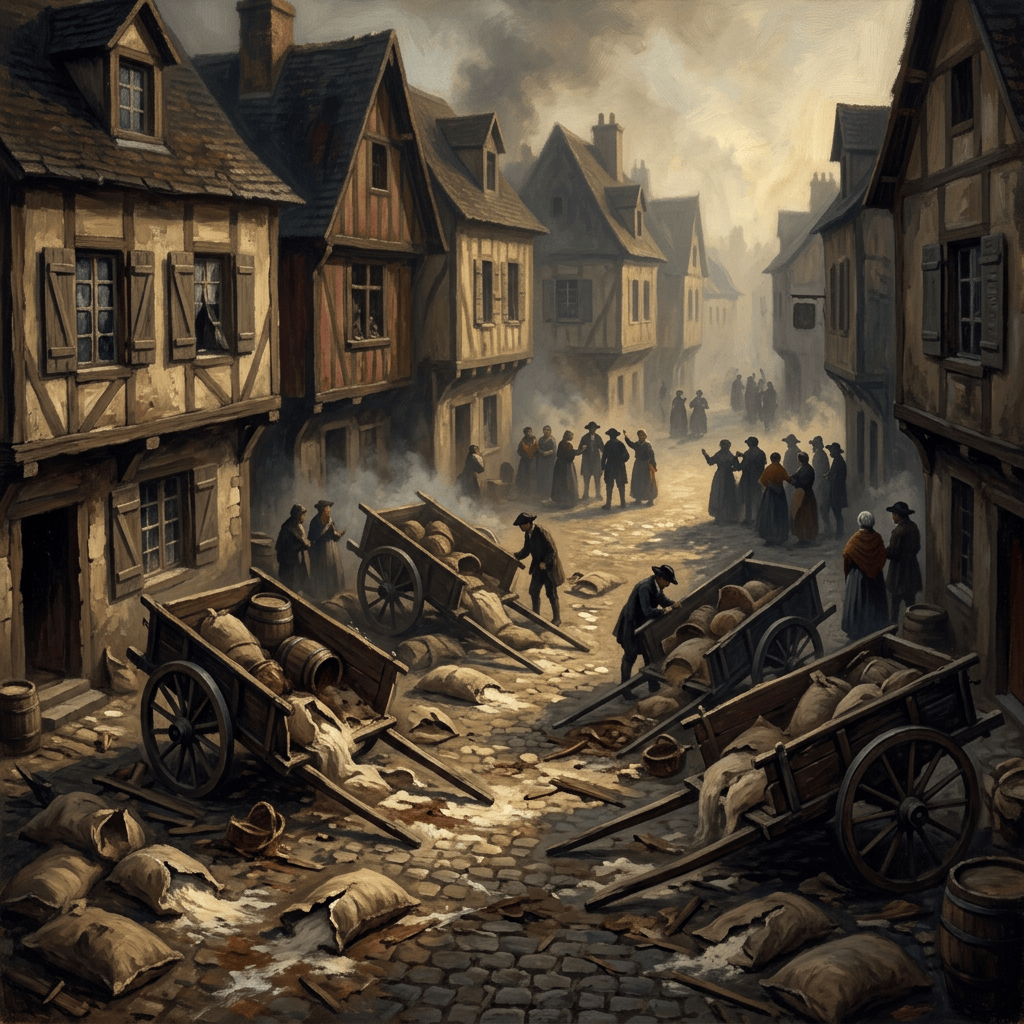
Enter the Flour War of 1775. Over three hundred riots erupted like brushfires across the Paris basin in a matter of weeks. Starving laborers didn’t write polite letters to their representatives; they kicked in bakery doors, dragged grain out into the streets, set the price themselves, threw down pennies, and dared anyone to stop them.
By 1789, they weren’t bargaining anymore. When thousands of soaked, exhausted, furious market women marched twelve miles through the mud to Versailles, they weren’t marching for voting rights or tax reforms. They had butcher knives tucked into their skirts. They were hunting grain. They besieged the palace, demanding “the baker, the baker’s wife, and the baker’s boy,” because if the king couldn’t secure the flour, the crown was just scrap metal.
We love to look back at powdered wigs and think we’ve outgrown that kind of savage, visceral desperation. We haven’t. We just sanitized the spreadsheets.
Right now, in 2026, 645 million human beings are starving. More than two billion are scraping together meals that barely keep the lights on in their brains. Over a third of this planet cannot afford a diet that won’t slowly wreck their organs.
And the dirtiest secret of it all? There is plenty of food.
We grow enough grain to feed every single mouth on the globe twice over. We dump it into cattle feed, burn it into biofuels, or rot it in giant silos while hedge funds trade futures on wheat yields. People aren’t starving because the earth forgot how to produce calories; they’re starving because the machinery of distribution doesn’t care about their hollow bellies unless there’s a profit margin attached.
Every modern suit on television preaching belt-tightening and supply-chain patience is just wearing a bespoke variation of Marie Antoinette’s silk dress.
A empty stomach doesn’t care about macroeconomic policy. It doesn’t care about geopolitical headwinds or sovereign debt ceilings. It just hurts. And the moment that personal ache turns into collective rage, the math changes very quickly.
Bread isn’t a commodity. It’s the thin crust of pastry standing between civilization and the fire next time. If the people at the top don’t figure out how to pass out the flour, history has a very predictable habit of handing out the torches.


Leave a Reply