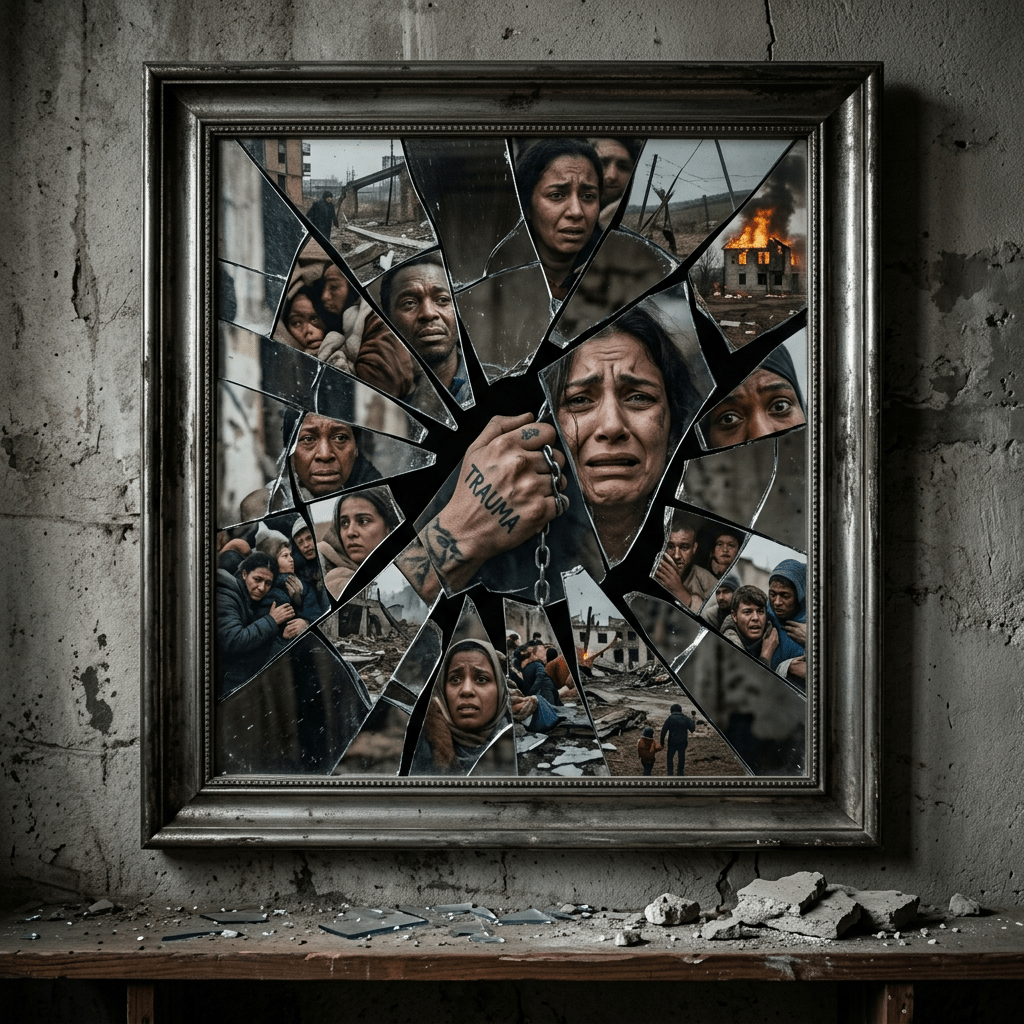
International Trauma Awareness Day
Trauma Awareness Day | A public health perspective
As a doctor, I have learnt that the body does not always tell its story in words.
Sometimes, it speaks through disturbed sleep, persistent headaches, a racing heart or a stomach that seems to have opinions of its own. Sometimes, it speaks through anger that appears disproportionate to the situation, withdrawal from people or an extraordinary ability to anticipate trouble.
And sometimes, there are no obvious signs at all. The person goes to work, pays the bills, attends family functions and asks whether everyone has eaten. Life appears perfectly normal. Inside, however, something may still be struggling.
We are reasonably good at recognising a fracture on an X-ray or an infection through clinical signs. Emotional injuries are less obliging. They do not always announce themselves, and they rarely follow the timetable we would prefer for recovery.
A road accident may last a few seconds. A frightening medical emergency may be over in hours. A childhood spent anticipating the next outburst may be long past. Yet the experience can continue to influence how a person responds to the world.
A raised voice may feel threatening. An ordinary disagreement may provoke an extraordinary response. A harmless delay may produce disproportionate anxiety.
The event may be over. The body, unfortunately, has not always received the circular.
This is why trauma deserves attention as a public health concern. Not every difficult experience causes lasting psychological harm, and not every unexplained symptom is due to trauma. But understanding how overwhelming experiences can affect our minds, bodies and behaviour helps us recognise distress and respond with greater sensitivity.
What exactly is trauma?
The word trauma is used rather freely. A disappointing meal, a bad haircut or an unfavourable examination result may all be described as traumatic. Human beings are expressive creatures, particularly when dinner is involved.
In public health, however, precision matters.
Psychological trauma refers to the effects of overwhelming or threatening experiences. These may involve violence, serious injury, threatened death or other circumstances that profoundly affect a person’s sense of safety and well-being.
Not everyone exposed to the same event develops lasting trauma-related difficulties. Our responses depend on several factors, including the nature of the experience, previous experiences, available support and whether we feel safe afterwards.
It is also important to distinguish between a traumatic event, a trauma response and a clinical diagnosis such as post-traumatic stress disorder (PTSD). They are related, but they are not interchangeable.
Trauma is not a measure of how strong or weak someone is. It is a reminder that people respond differently to overwhelming experiences.
Trauma takes different forms
Trauma does not always arrive as one dramatic event. It may be sudden, prolonged, repeated or experienced collectively.
- Acute trauma may follow a road accident, assault, natural disaster or frightening medical emergency. Initial reactions can include shock, fear, confusion and disturbed sleep.
- Chronic trauma can arise from repeated or prolonged exposure to threatening circumstances, such as domestic violence, abuse, persistent bullying or living in a conflict zone.
- Complex trauma refers to the effects of repeated or prolonged interpersonal trauma, particularly when escape is difficult. It may affect emotional regulation, trust and relationships.
- Developmental trauma describes the potential effects of adverse experiences during childhood, when emotional, cognitive and social development are underway. Supportive relationships can help protect children from lasting harm.
- Secondary or vicarious trauma may affect healthcare professionals, counsellors, emergency responders and caregivers who repeatedly encounter the suffering of others. It is related to, but different from, burnout and compassion fatigue.
- Collective trauma affects communities exposed to events such as pandemics, war, natural disasters or widespread violence.
These categories can overlap. They help us understand experiences; they are not labels to assign casually.
How does trauma show up in everyday life?
Trauma does not have one recognisable face. It may affect emotions, physical health, thinking, behaviour and relationships.
Emotions: Fear, anxiety, sadness, anger, guilt, shame or emotional numbness.
Physical symptoms: Disturbed sleep, fatigue, headaches, muscle tension, digestive discomfort or a racing heart.
Thinking and memory: Difficulty concentrating, unwanted memories, nightmares or heightened awareness of possible danger.
Behaviour and relationships: Avoiding reminders, withdrawing socially, struggling to trust others or relying increasingly on alcohol or other substances.
These symptoms can have many causes. They do not, by themselves, establish that someone has experienced trauma. Persistent or unexplained physical symptoms deserve appropriate medical assessment.
Consider someone involved in a road accident. The vehicle has been repaired, the insurance paperwork completed and the relatives have stopped calling every morning. Yet weeks later, the person grips the armrest whenever another vehicle approaches too closely.
The traffic may have returned to normal. The passenger has not.
Why does the past sometimes feel like the present?
Our nervous system helps us recognise danger and prepare to respond. When we feel threatened, our heart rate may rise, our muscles tense and our attention narrow. Once the danger passes, these responses usually settle.
After a frightening experience, however, reminders may sometimes trigger intense distress even when the present situation is different.
A smell may bring back memories of a hospital emergency. Braking tyres may evoke an accident. A particular tone of voice may remind someone of earlier violence.
Think of a smoke alarm that becomes extraordinarily enthusiastic about burnt toast. It is designed to protect the household, but its sensitivity can become inconvenient when there is no actual fire.
Human beings are not machines, of course, and trauma is not simply a faulty alarm. But the comparison helps explain how a protective response may be triggered by reminders of earlier danger.
This is why telling someone to just forget about it is rarely helpful. If the response were entirely under voluntary control, they might already have done so.
Understanding the reaction does not mean excusing harmful behaviour. It means recognising that there may be more to it than meets the eye.
Healing begins with safety, not a lecture
When someone is distressed, advice tends to arrive quickly. Meditate. Exercise. Think positively. Forgive. Take a holiday.
Occasionally, we manage to prescribe all five before the person has finished explaining the problem.
The intention may be kind. The result is not always helpful.
Recovery begins by understanding what the person needs.
Establish safety. If someone is still exposed to violence or abuse, addressing that danger comes first. Medical care, secure accommodation, food and rest may be more urgent than discussing the experience.
Listen without judgement. Let people decide what they wish to share. Avoid comparisons, blame or pressure to recount painful details.
Restore choice. Explain what will happen during an examination, ask permission before touching someone who is distressed, and offer choices wherever possible. A sense of control can matter enormously after an experience that left someone feeling powerless.
Strengthen support. Family, friends and community networks can help. Sometimes support means accompanying someone to an appointment; sometimes it means taking over a practical task without demanding a lengthy explanation.
Respect boundaries. Do not insist that someone forgive, reconcile or confront another person before they are ready.
Compassion does not require us to take charge of another person’s recovery.
When is professional help needed?
Many people gradually recover with time, safety and supportive relationships. Others need professional care.
Consider an assessment by a qualified mental health professional when symptoms persist, worsen or interfere with work, relationships, sleep or everyday activities.
Recurrent nightmares, flashbacks, severe anxiety, persistent low mood or significant avoidance may warrant particular attention. Thoughts of self-harm or suicide require prompt help; immediate danger calls for urgent local assistance.
Evidence-based treatments for PTSD and related trauma symptoms include trauma-focused cognitive behavioural therapies and Eye Movement Desensitization and Reprocessing (EMDR). The appropriate approach depends on the person’s symptoms, circumstances and clinical assessment.
Grounding exercises, gentle movement, relaxation, regular physical activity and adequate sleep may support well-being. They can complement treatment but are not guaranteed cures or substitutes for professional care when needed.
There is no universal prescription for healing. Anyone promising one should be approached with healthy curiosity.
Resilience is not another demand
We admire people who overcome adversity. We celebrate their courage and sometimes turn their experiences into inspirational quotations.
There is nothing wrong with recognising resilience. The problem begins when resilience becomes another expectation placed on someone who is already struggling.
Not everyone who experiences trauma emerges with a profound new philosophy of life. Some people simply want to sleep peacefully, return to work or stop feeling frightened in situations others take for granted.
That is a perfectly legitimate goal.
Resilience is not the absence of distress. It is the capacity to adapt and recover, often with the help of supportive relationships and appropriate services.
Some people eventually find meaning in their experiences. Others do not.
Suffering does not have to produce wisdom to make recovery worthwhile.
Trauma is also a public health responsibility
A child cannot meditate their way out of an unsafe home. An employee cannot think positively enough to eliminate workplace harassment. An exhausted caregiver cannot solve a shortage of support services simply by becoming more resilient.
Individual coping strategies have a place, but the environment matters.
Trauma-informed healthcare, schools, workplaces and community services recognise that overwhelming experiences can affect people’s sense of safety and trust. They aim to reduce avoidable harm, protect dignity and respond appropriately when someone seeks help.
In practice, this means:
- Creating safer homes, schools and workplaces.
- Responding appropriately to violence, abuse and disclosures of harm.
- Making mental health services accessible.
- Supporting caregivers and professionals repeatedly exposed to suffering.
- Protecting confidentiality and respecting personal boundaries.
We cannot prevent every traumatic event. We can reduce exposure to harm, respond more effectively when it occurs and make support available before distress becomes harder to manage.
What can each of us do?
Trauma awareness begins in ordinary interactions.
- Listen before interpreting. A reaction may have a history we do not know.
- Avoid comparisons. Another person’s suffering does not invalidate this person’s experience.
- Respect boundaries. Do not force disclosure, forgiveness or reconciliation.
- Offer practical help. Ask what would make the next day easier.
- Know your limits. Friends and family can provide support, but they do not have to become therapists.
- Pay attention to your own well-being. Caregivers and healthcare professionals need support, too.
Behaviour is visible. Its causes are not always obvious.
Someone who appears angry may be frightened. Someone who withdraws may be overwhelmed. Someone who seems exceptionally capable may be carrying more than anyone realises.
These are possibilities, not conclusions. We should remain curious without assuming that we know another person’s story.
When you need support, reach out
You do not have to wait until you are unable to cope before seeking help.
If distress is affecting your sleep, relationships, physical well-being or ability to manage everyday life, consider speaking with a qualified mental health professional. You do not need to have all the answers, know exactly what is wrong or find the perfect words to describe what you are experiencing.
Sometimes, the first step is simply making time to understand what is happening and what kind of support might help.
If you would like to explore a therapy session, you can schedule a session here.
Seeking help is not a sign of weakness. It is a step towards understanding yourself, caring for your well-being and finding a way forward.
You deserve support before distress becomes overwhelming, not only after you have exhausted every other option.
A final thought for Trauma Awareness Day
As a doctor, I am reminded that good care begins with attention: to what a person says, to what their body may be communicating, to the circumstances in which they live and to the explanations we have not yet considered.
The same principle applies beyond medicine.
We can stop treating distress as a character flaw. We can listen without rushing to judgement, recognise when professional help is needed and create environments where people feel safer asking for support.
Perhaps we can also retire one particularly unhelpful piece of advice: “It is all in your head.”
Even when distress is psychological, its effects can be felt throughout the body, relationships and daily life. That does not make the suffering imaginary. It makes it worthy of attention.
Awareness creates understanding. Understanding makes compassionate care possible. And compassionate, evidence-based support can help people move towards recovery.
Public health note: This article is intended for general awareness and does not replace individual medical or psychological assessment.


Leave a Reply