My children are safely past their teens. If they had followed the traditional Indian social timeline that our aunties obsess over, my kids would probably be packing school lunches for pre-teens right now. Technically, according to the blogging gods, I shouldn’t even qualify to write about childhood immunization schedules.
Yet when an invite popped up nudging lifestyle and mommy bloggers to write about severe childhood diseases, I didn’t just raise an eyebrow—I felt that distinct burn of secondhand irritation.
Since when did crowd-sourced lifestyle bloggers become the front-line defense against pediatric epidemics?
It felt like a grand audition for an army of self-taught “Google doctors”—or rather, “AI doctors” in our brave new automated world. Was this an awareness audit for the Ministry of Health and Family Welfare? A silent market survey for local Rotary and Lions clubs looking for their next banner project? Or simply the pharmaceutical industry’s subtle way of outsourcing public health communication to anyone with an internet connection and a keyboard?
If public health campaigns genuinely want to educate the smartphone generation, sending twenty-somethings to read long-winded text is a lost cause. Young parents consume information in ten-second vernacular video clips, not academic essays.
In fact, if you really want an awareness campaign that captures attention, skip the blogger prompts. Picture a high-production video where a radiant Parineeti Chopra and her chocolate-boy politician hubby sit down to get a real, no-nonsense vaccination masterclass directly from the Union Health Minister, the Director of AIIMS, or the leadership of the Indian Academy of Pediatrics (IAP). That is content people would actually stop scrolling to watch.
Instead, we ask lifestyle writers to parse clinical guidelines. But rather than producing another sanitized explainer, let’s strip away the corporate jargon and talk about what actually matters when protecting a child.
The Grand Google Illusion: Information Isn’t Expertise
Here is what usually happens when a modern parent spots an unfamiliar symptom:
- Panic sets in.
- A search engine query is typed at 2:00 AM.
- The top results serve up whichever pharmaceutical brands spent the most on search engine optimization that quarter.
- Panic intensifies.
The fundamental flaw in turning ordinary citizens into armchair clinicians is simple: we confuse the act with the outcome.
Most people use the terms interchangeably, but they aren’t the same thing:
- Vaccination is the simple, physical act of administering an antigen (a prick in the arm or a drop on the tongue). It’s what the healthcare provider does.
- Immunization is the biological miracle that happens afterward—the complex immune response where the body produces protective antibodies to fight off future infections. It’s what the body does.
A syringe contains a vaccine; it does not automatically guarantee immunity until the biological system learns from it. For a comprehensive overview of how these formulations work, you can explore the CDC Vaccine Resources
.
Why Aren’t All Vaccines Mandated by the Government?
A common question that sends parents spiraling into online forums is: “If a vaccine exists in a private clinic, why isn’t it part of the free government Universal Immunization Programme (UIP)?”
The immediate cynical assumption is that the system is cutting corners. The medical reality is far more pragmatic. Public health policies do not evaluate vaccines the way individual consumers shop online. For an intervention to be rolled out across a country of 1.4 billion people, it must clear strict, systematic hurdles:
- Disease Burden: Is the condition widespread enough, or does it carry a devastating rate of fatality and lifelong disability across the general population?
- Clinical Safety & Efficacy: Has it been tested rigorously to prove that its protective benefits dramatically outweigh any statistical adverse risk?
- Transmission Interruption: Does administering it actually halt community transmission or build herd immunity?
- Economic & Practical Viability: Can the cold chain handle it? Can an Anganwadi worker or an auxiliary nurse midwife store, transport, and administer it reliably in remote rural outposts without temperature failures?
When a vaccine isn’t on the standard public card, it often means the disease is regionally clustered, epidemiologically rare, or better managed through targeted clinical advisories rather than universal mandates.
Understanding the Reality of Meningitis
Consider meningococcal
disease. It is an infection caused by the bacterium Neisseria meningitidis, leading to severe swelling of the protective membranes covering the brain and spinal cord, or severe bloodstream infections.
It is notoriously aggressive. A child can go from mild, flu-like symptoms to a life-threatening critical state within twenty-four hours.
Because of its sudden progression, panic is common. But here is the pragmatic breakdown:
- The Reality: Outbreaks occur, but they are not uniform across every district in India. Some environments—such as crowded dormitories, specific travel belts, or children with defined primary immunodeficiencies—carry significantly higher exposure risks.
- The Clinical Decision: Should your child receive this vaccine? That isn’t a decision to crowdsource from a lifestyle influencer or a late-night search engine binge. The Centers for Disease Control and Prevention provides clear technical documentation, but your local pediatrician is the only professional equipped to balance global data against local epidemiological risk.
Common-Sense Upgrades for Modern Healthcare
If our healthcare systems want to bridge the communication gap, the solution isn’t generating more outsourced web content. It comes down to basic systemic common sense:
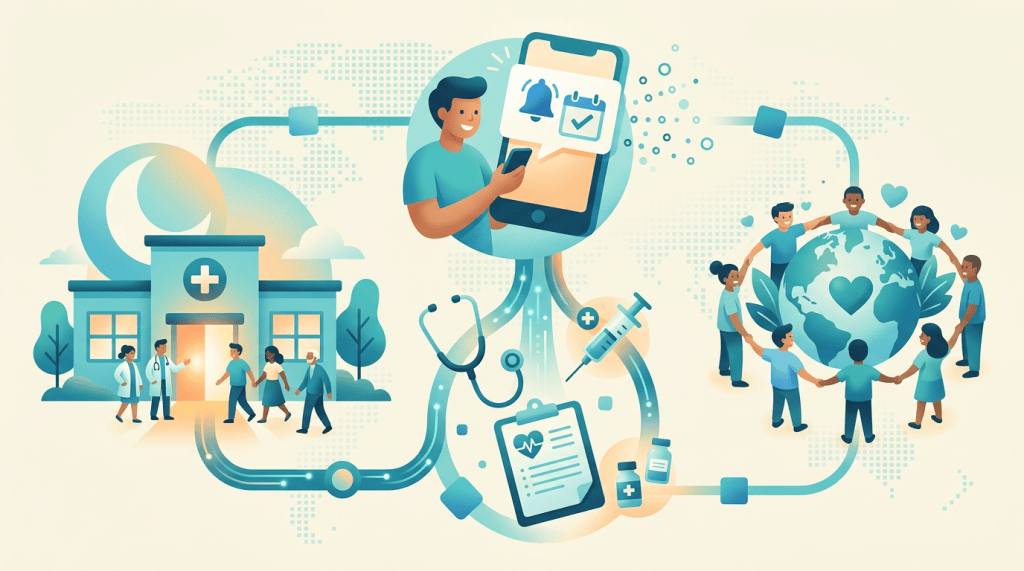
- Automate Reminders at Birth: Every newborn receives civil registration. Link the standard schedule to basic digital infrastructure—send automated SMS and messaging reminders to parents 48 hours before each milestone, just like a utility bill or bank alert.
- Support the Frontline Workers: The Anganwadi workers, Accredited Social Health Activists (ASHAs), and Primary Health Centre (PHC) staff do more heavy lifting for child survival than every corporate health portal combined. Equip them with vernacular, direct communication tools.
- Retire the Search Engine Diagnosis: When in doubt about whether an optional vaccine is necessary for your family, close the browser tabs, ignore the forum threads, and schedule ten uninterrupted minutes with an experienced pediatrician.
Medicine requires nuance, diagnostic context, and years of clinical observation. Leave the treatment advice to the professionals, and let the rest of us stick to common sense.
Disclaimer: This article has been written as part of an awareness initiative by Blogchatter and reflects the author’s personal views. It is for informational purposes only. It does not constitute medical advice, diagnosis or treatment recommendations. Please consult your doctor for advice specific to your individual health needs.


Leave a Reply