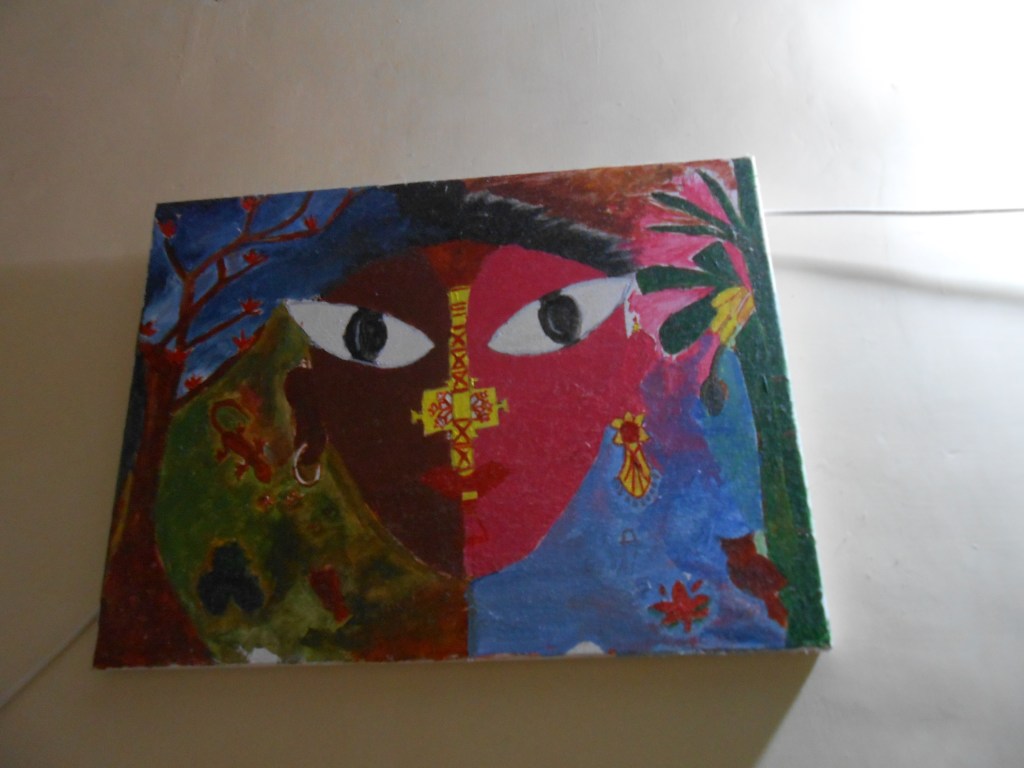
Why Your Shadow Might Be Alakshmi
Every Diwali, the ritual is the same: scrub the tiles until they squeak, light enough oil lamps to alert air traffic control, leave the front door unlocked, and invite Lakshmi in. We want the radiant goddess of abundance, cash flow, and silk-sari opulence.
Meanwhile, dangling just outside the threshold is a twisted string of seven hot green chillies and a pierced lemon.
We tell ourselves it wards off the “evil eye.” But in classical folklore, that pungent snack is actually catering. It is set out for Lakshmi’s older twin sister, Alakshmi (often fused with Jyeshtha Devi). She loves sour, bitter, pungent things. The unspoken deal? Eat your snack on the porch, take the hint, and do not cross the threshold.
We treat Alakshmi as divine toxic waste. But if you peel back the ritual paranoia, her myth isn’t about an ugly hag ruining your bank account. It is an ancient, razor-sharp psychological blueprint for how human beings sabotage their own lives from the inside out.
The King Who Shortchanged Chaos: Mooruvare Vajra
Take the classic Kannada folktale and folklore film Mooruvare Vajra (“Three and a Half Diamonds”).
A pious king sets out to perform an elaborate ritual, inviting the Ashta Lakshmis—the eight classic forms of abundance—into his kingdom. Everything is golden, serene, and curated. But as the ritual wraps, an uninvited guest arrives at the palace gates: Alakshmi.
Disgusted by her unaesthetic appearance and association with misfortune, the queen insists she be shut out. The king refuses to admit her. Alakshmi leaves, but cosmic law is not so easily cheated. You cannot invite the light and simply lock the door on the shadow.
When Lakshmi enters, she brings effortless fortune; but because her twin was dishonored, the kingdom’s fortune rots from within. Paranoia creeps in, judgment fails, internal conflicts ignite, and the king is stripped of his throne, wandering in exile until he learns the bitter lesson: you cannot curate life into only the parts that feel pleasant.
True wholeness—and the ultimate prize of the “three and a half diamonds”—is only realized when the king recognizes that loss, humility, and the unglamorous underbelly of life demand their own respect.
There is another brilliant story where the two sisters approach Vishnu and demand to know who is more beautiful. Vishnu, playing master diplomat, tells them: “Lakshmi, you are breathtaking when you enter a room. Alakshmi, you are stunning when you leave.”
It gets a laugh, but unpack it: abundance is felt in arrival; toxicity and stagnation are felt in the sweet, clear relief of departure.
Decoding the Vibe: Her Aesthetic is a Call-Out
Traditional iconography didn’t just assign symbols for dramatic effect; it built visual shorthand for human dysfunctions. Look closely at Alakshmi’s entourage, and you don’t see an evil demon. You see the machinery of an unexamined life:
- The Donkey (Gardabha): Labor Without Awareness
The donkey doesn’t just represent stubbornness; it represents mindless grinding. It’s staying in a dead-end job, carrying someone else’s emotional baggage for five years, and repeating the exact same argument every Tuesday night. It is endurance stripped of discernment—hustle culture without a soul. - The Crow (Kakka): The Grievance Collector
Crows scavenge where things are already dead. Psychologically, this is the compulsive need to feed on drama, track who wronged you in 2019, and doomscroll other people’s failures. The crow doesn’t create decay; it gathers where emotional rot already exists. - The Broom (Jhadu): The Tool of Avoidance
In daily life, a broom cleans. But Alakshmi’s association with it exposes the shadow side: sweeping dirty realities under the rug. It’s ghosting instead of having the difficult conversation, masking insecurity behind toxic positivity, or ditching relationships the second they require actual emotional repair. - The Diet: Bitter and Sour
Lakshmi is offered laddoos, milk sweets, and honeyed fruits. Alakshmi feeds on sour lime, raw chillies, and astringent roots. She thrives in the bitter spaces: resentment, sharp tongues, and the cynical aftertaste of envy.
The Real Haunting: How Alakshmi Occupies a Life
In the Puranas, when Alakshmi is asked where she prefers to set up camp, she doesn’t name slums or empty wallets. She chooses:
- Homes where family members quarrel constantly.
- Spaces heavy with inertia, unwashed dust, and neglected corners.
- Environments dominated by stinginess, deceit, and arrogance.
This kills the myth that poverty equals Alakshmi and wealth equals Lakshmi.
You can live in a sea-facing penthouse, pull an eight-figure salary, and be completely colonised by Alakshmi. If every interaction you have is transactional, if you view someone else’s win as your personal demotion, and if you hoard resources out of terror that you will run out—that is pure Alakshmi consciousness.
Conversely, a small home with modest means, where food is shared freely and laughter is genuine, lives firmly in the territory of Lakshmi.
| Lakshmi Consciousness | Alakshmi Consciousness |
| Abundance (Trust in capacity) | Scarcity (Constant panic of “never enough”) |
| Celebration (Hyping up your peers) | Envy / Matsarya (Secretly resenting their win) |
| Maintenance (Tending to what sustains you) | Inertia / Alasya (Letting relationships decay) |
| Generosity (Flow of value) | Hoarding / Lobha (Emotional and material clenching) |
| Clarity & Focus (Lakshya) | Distraction & Chaos (Alakshya) |
Notice that Sanskrit root: Lakshya means aim, focus, attention. Alakshya is drift—the brain-fogged, unfocused state where life just happens to you while you complain about the outcome.
The Shadow You Can’t Ban
The Lakshmi Pancharatra hints at an uncomfortable esoteric truth: if understood and appeased, Alakshmi possesses raw, primal potency.
Why? Because she rules the grit. Cow dung is messy, but it fertilizes the soil and powers the hearth. A broom touches dust, but without it, the temple cannot be sanctified. The sourness of a lemon is unpalatable on its own, but it preserves and cuts through grease.
When you demonize Alakshmi, you are simply disowning your own shadow. You are trying to live in an Instagram reel where everything is aesthetically pleasing, frictionless, and perpetually abundant. But life doesn’t run on uninterrupted sugar.
If Lakshmi represents the Supramental spark—our innate human capacity for joy, creation, and harmony—then Alakshmi isn’t some outside demon cursed to ruin your week. She is the direct byproduct of unconscious living. She is what happens when you abandon maintenance.
Vishnu represents Sthiti—preservation. Wealth and love aren’t static trophies you win once; they require daily operational upkeep. The moment you stop tending to your craft, your physical space, or your commitments, the vacuum is filled automatically. You don’t have to invite decay; it moves in the second you stop paying attention.
The Audit: Where Is She Sitting in Your Room?
Instead of hanging lemons by your door to keep the boogeyman out, it might be worth running a quick diagnostics check on your own habits:
- Whose success did you secretly minimize this week? (The crow is feeding).
- What long-dead argument are you still dragging behind you? (The donkey is loaded).
- What dirty emotional reality are you kicking under the rug instead of resolving? (The broom is sweeping backward).
- Where are you acting from a scarcity mindset, even when you have enough? (Alakshmi is at the dinner table).
You don’t defeat Alakshmi by pretending she doesn’t exist or driving her away with noisy rituals. You integrate her. You take the grit, the stubborn resilience of the donkey, and the sharp discernment of the crow, and you point them toward self-awareness.
When the shadow is addressed, the sourness does its job: it cleanses the palate so that when abundance finally enters, you actually have the capacity to taste it.


Leave a Reply