Rasam, Horegallus and Samosas.
Certainly! Here’s a revised and expanded version with added quotes, observational humor, and reflections:
“This woman is bordering on being pompous and judgmental,” Aunt Selvi declared, tossing the book onto the coffee table with an air of finality.
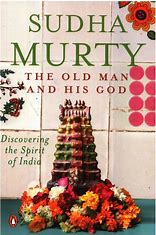
I discreetly eyed the cover. Sudha Murthy. Well, wonders never cease. Aunt Selvi rarely indulges in Indian authors, and her reactions usually fall somewhere between amused indifference and outright disdain.
“How…come?” I ventured cautiously.
“Aiyoo, I went to visit Sheela at her senior citizens’ community. This book was lying around.”
It all began to make sense. Sheela’s book collection, curated from community donations, had an eclectic mix: self-help, detective stories, and, clearly, Sudha Murthy.
“And? How did you like it?”
“Penguin published it because she is part of Infosys Foundation!” Aunt Selvi snorted.
Now, don’t get me wrong—Aunt Selvi is caustic, but never malicious. Her judgments are often sharp but not entirely unwarranted. I waited. The book, I knew, was about to be dissected with all the precision of a surgeon and the flair of a chef chopping onions on live television.
“She tells these stories that are possible, but these are the kinds of stories we’d share over chai or at weddings. Everyday wisdom. If we wrote them, we’d have to self-publish or give them away free. But, since she’s Sudha Murthy and the chairman’s wife, Penguin prints it.”
I had read The Old Man and His Gods myself. The stories were brief glimpses into everyday India, often touching, sometimes moralistic. Subtle victory flags of charity and social work waved here and there, alongside an acknowledgment of low ambition as a virtue.
Aunt Selvi, now fully in her stride, continued, “Her writing is plain—like diluted rasam. And the presentation? Nothing spectacular. She sneaks in the charity bits like they’re garnish, but we all know they’re the main ingredient.”
Two stories had stayed with me. One was a clash of ideologies—a young Narayana Murthy’s socialist dream met its Waterloo in Europe. A chance encounter with capitalistic reality transformed his economic outlook, not in terms of wealth but in terms of action and speech.
The second was Horegallu, about stone benches placed on village paths where travelers, especially those carrying heavy loads, could rest. “A horegallu is essential,” her grandfather had told her. “It helps people unburden, even if temporarily.”
I had loved the sentiment but couldn’t help thinking about its Goan equivalent—the Doverne. Vendors used these resting points to not only catch their breath but to gossip, argue, and exchange news, much like the bus stops of the 1980s. Trust Sudha Murthy to make her grandfather the hero of the story, while I found the humble Doverne far more intriguing.
At this point, Aunt Selvi made another pronouncement. “It’s a decent Dadar-Churchgate read. You know, when you’ve finished the TOI crossword and are avoiding eye contact with the vendor pushing samosas.”
I laughed. She wasn’t wrong. Sudha Murthy’s books had a certain charm—unpretentious and relatable—but they weren’t literary masterpieces. They were the sort you could read between stations or while waiting for a dosa at Vidyarthi Bhavan.
“‘If you don’t try to be a better person, you will not get satisfaction in life,’” Aunt Selvi mimicked, quoting Murthy from memory. “Tell me, isn’t that just common sense? My grandmother used to say the same thing, but with more drama.”
To her credit, Murthy’s words do often capture universal truths in a deceptively simple way. Take, for instance, her observation: “Life is an exam where the syllabus is unknown and question papers are not set.” It’s true, profound even, but as Aunt Selvi would point out, so is “Life is like a masala dosa; it’s all about how well you fold the filling.”
“Did anything resonate with you?” I asked, trying to steer her away from complete demolition.
“Well, the story about the old man who stayed up all night to guard the village temple was touching. I’ll give her that. And the one about the man who wanted his ashes scattered across different rivers—made me think of that old Rajnikanth movie!”
Sudha Murthy’s genius lies in her ability to tap into the everyday and make it meaningful. Even Aunt Selvi, for all her biting critique, couldn’t entirely dismiss her.
“Good one-time read for die-hard fans, I’ll say that much,” Aunt Selvi concluded, picking up her knitting needles. “But next time, I’ll stick to Agatha Christie.”
As I mulled over her words, I realized Aunt Selvi wasn’t being pompous or judgmental—well, maybe a little. She was simply voicing what many of us felt: Sudha Murthy’s stories are like old, familiar tunes. Comforting, yes. Groundbreaking? Not quite.
Still, isn’t there a place for both the daring symphony and the humble hum of a lullaby? For every reader, a different rhythm. And for every Sudha Murthy, an Aunt Selvi waiting to dissect her.
author: Sudha Murthy
Publisher Penguin Random House India.
ISBN:
 Parwatisingari's Weblog
Leave a comment