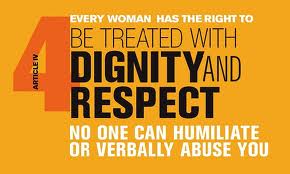
Violence Without Bruises: A Small Tale of Big Gaslighting
People imagine domestic violence as something loud—shouts ricocheting off walls, a door shaking in its frame, something dramatic enough for neighbours to raise eyebrows over. But the real thing? The everyday version? It walks around the house in polite slippers, whispering instructions. It has perfect timing, usually at 5 a.m., and it loves beginning the day with:
“So… what are we giving Mom for breakfast?”
It’s not a question. It’s a reminder that a woman’s to-do list begins before sunrise, with no snooze button and no applause.
Now meet Jijabhai’s sons—two men produced from the same household but emotionally marinated very differently.
Son 1 walks in like he’s starring in his own life’s musical.
“Sakkuu, where are you?” he calls, as though she is a misplaced accessory he loves very dearly. He sweeps into his room, spends time with her, and only then goes to see his mother. And of course, Aayee sulks, deeply wounded by the tragedy of not being her son’s first pit stop.
Sakku, however, has learned to sail through this domestic ocean. She’s developed navigation tools—humour, timing, just the right smile, a gentle nudge here, a firm silence there. She has decoded the emotional landscape, learned where the quicksand lies, and can sidestep it with the elegance of a seasoned diplomat. If patriarchy built the house, Sakku learned to read the blueprint.
But Janna? She’s living in the basement of emotional recognition, silently keeping the whole place running while being treated like a utility—important only when something stops working.
See, Son 2 is a different creature altogether. He enters with administrative intent, clipboard energy, and the emotional subtlety of a bank auditor.
“Janna, did you give Aayee her tea?”
Not “Hello.”
Not “How are you?”
Straight to the performance evaluation.
He inspects every dish she cooks like a quality control inspector at a factory. The curry? Stir it. Smell it. Compare it to Mom’s taste profile. The dal? Too thick? Too thin? Too whatever-he-thinks-will-keep-his-mother’s-approval-balance-high.
He isn’t being cruel on purpose. That’s the charm of everyday patriarchy—it rarely knows it’s being violent. It just assumes its own correctness, like gravity or Wi-Fi.
And poor Janna—the woman who holds this house together—is a ghost in her own story. Not out of weakness, but because everyone simply assumes she should be invisible. Her work is seen; she is not. If the maid is absent, it goes without saying:
Default Setting → Janna stays back. Sacrifice comes pre-installed.
Her needs are footnotes. Her exhaustion is background ambience. Her dreams? Those were quietly folded away years ago, like sarees meant only for special occasions that never arrive.
This—this constant erasure, these small but incessant reminders of where she stands in the hierarchy—is emotional violence. No shouting. No hitting. But a thousand tiny needles piercing daily life until the soul begins to bruise.
This is the hidden architecture of domestic life: emotional architecture.
It’s not the walls or doors—it’s the expectations, the guilt trips, the silent assumptions that women will stretch themselves until there’s nothing left to stretch.
In this house, Sakku is the one who’s learned to glide, dance, pivot—she plays the emotional instrument with practiced ease. She’s not free, but she is fluent.
Janna, meanwhile, is the structure’s load-bearing column—unnoticed, unthanked, but holding everything up.
Imagine, for a moment, that house safety isn’t just about locks on the doors but about whether a woman can breathe inside her own life. If architects had to inspect emotional safety like building safety, half the households in the country would be red-tagged:
Unsafe for Women. Structural Emotional Damage Detected.
Because here’s the truth: violence without physical marks is still violence.
Silencing is still violence.
Erasure is still violence.
Janna knows it in her bones—even if no one else sees it. She wakes before dawn, not because she wants to, but because someone has to make breakfast decisions that will be judged by a mother-in-law and monitored by a husband who treats her like an employee on probation.
Imagine the absurdity: A grown man asks his wife, first thing in the morning, “Did you give Mom her tea?” as if Aayee were an endangered species whose survival depends on tightly scheduled beverage management.
And yet, the world refuses to place this behaviour under the category of violence because it does not look dramatic enough. But emotional labour—unpaid, unseen, unending—is a slow poison.
And that’s where feminist emotional sovereignty comes in.
Not as a political speech or a protest march (though those help), but as a quiet and radical claim:
“I exist.
My time counts.
My voice matters.
My labour is not automatic.”
Imagine Janna, in a tiny moment of rebellion, saying with a straight face,
“No, I didn’t give Aayee her tea. Maybe you can show me how you like to do it.”
Or, even better, walking out for a morning walk—leaving the tea question floating helplessly in the air.
That’s sovereignty—not a revolution, but a refusal.
Not a scream, but a boundary.
And until households learn that checking on a woman like she’s a malfunctioning appliance is a form of violence, women like Janna will remain invisible pillars holding up worlds that refuse to see them.
But one boundary at a time, one small assertion at a time, one whispered “No” at a time—the architecture can shift.
Even Aayee will survive it.
 Parwatisingari's Weblog
Leave a comment