This post is written for Blogchatter Bloghop.
Aryamba was at elevenses: ginger tea, khakra, and the firm conviction that civilisation had peaked sometime before mobile phones. Across the road an auto-rickshaw coughed to a halt. Out stepped Algasekharan, dark as roasted coffee and draped in black. He was returning from Sabarimala.
For as long as Aryamba could remember, he had gone there every year with the punctuality of income tax notices and monsoon potholes.
She watched him lumber away and wondered whether Ayyappa still resided comfortably atop the hill. The deity had once occupied a forest shrine. Now he presided over an annual invasion that would have made locusts from Punjab look like a disciplined picnic party. They came in swarms. They came barefoot. They came unbathed, unshaven, sexually abstinent and frugally fed. A triumph of devotion and a challenge to the Health Department.
Well, she thought, that was Ayyappa’s problem.
Aryamba returned to the article she was supposed to be writing on Mohiniyattam.
The dance of the enchantress.
Inspired by Mohini, Vishnu’s most bewildering avatar and perhaps the finest example in mythology of divine gender flexibility. Mohini was not a permanent state. She appeared when circumstances demanded. During the Samudra Manthan, when gods and demons were squabbling over immortality like politicians over cabinet berths. Again when Bhasmasura needed to be outwitted. Again at Darukavana, where even Shiva, Lord of Yogis, reputedly found the enchantress impossible to ignore.
The scriptures, Aryamba reflected, were far less nervous about fluid identities than modern television debates.
In Darukavana, Shiva and Mohini’s union produced Ayyappa according to one tradition. Aryamba chuckled into her tea.
As far as biology textbooks were concerned, Hari and Hara were both men.
So what exactly did that make Ayyappa?
The question would probably get her expelled from three temples, six WhatsApp groups and at least one cultural association.
Back to Mohini.
Or not.
Mohini had also appeared in the story of Aravan. Before sacrifice in the Kurukshetra war, Aravan wished to marry. No woman volunteered to become a widow overnight. Vishnu became Mohini, married him, and mourned him after his death. To this day, communities associated with gender variance celebrate the story with far greater enthusiasm than most theologians.
Perhaps, Aryamba thought, Ayyappa was venerated because he represented acceptance of a state of being. There were no solidarity marches up the Sabarimala hill. No flags fluttering in affirmation. No declarations, no manifestos, no public negotiations with identity.
There was simply acceptance.
No need for external validation.
No need for self-doubt.
The deity existed. The tradition accepted him. The devotees worshipped him.
Everything else was commentary.
Of course, theologians would describe it more elegantly as the union of beauty and asceticism, attraction and renunciation, Hari and Hara. But Aryamba suspected ordinary devotees were often wiser than theologians. They accepted what was sacred without demanding an explanatory note.
Whatever.
Mohiniyattam was being mercilessly sidelined by her own wandering thoughts.
She allowed herself a few more minutes of wool-gathering.
Her mind travelled westward to the cult of Bahuchara Mata in Gujarat and Rajasthan. Here was another tradition where cross-dressing acquired sanctity instead of scandal. Men adopted feminine identities as part of devotion. The difference was not in the individual but in society’s response.
Acceptance by the goddess transformed ridicule into reverence.
What might have invited mockery elsewhere became sacred here.
The devotees did not require certificates from society. Their validation came from the deity. Once the goddess accepted them, the community venerated them. The matter was considered settled.
Funny, Aryamba thought, how divine endorsement seemed far more efficient than public debate.
Femininity in men had always provoked more anxiety than masculinity in women.
History celebrated women who put on male armour. Chitrangada came readily to mind. So did Rudrama Devi. They became warriors, rulers, legends.
But a man becoming feminine?
That made people nervous.
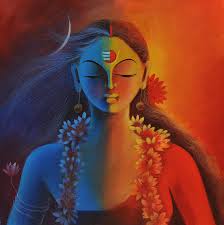
The old stories knew this. The Mahabharata certainly did. There was Shikhandi, born one thing and becoming another, crucial to the fall of Bhishma. There was Arjuna himself, spending a year as Brihannala, dance teacher and eunuch. There was Ardhanarishvara, Shiva and Parvati sharing one body with a composure that would send modern social media into cardiac arrest.
Perhaps the ancients were less confused than their descendants.
Or perhaps they simply had better stories.
Aryamba remembered the tale of Kalidasa and King Bhoja eavesdropping on lovers. The poet observed that friction existed because one lover was a woman while the other did not know that her partner was also a woman.
The king was scandalised.
The poet was amused.
Poets usually have the better deal.
Strange, Aryamba mused, that every generation believed it had invented complexity. The current one behaved as though questions of identity had emerged only after the invention of hashtags.
Maybe the issue was never LGBTQ.
Maybe the issue was acceptance.
Every society tolerated difference as long as it remained discreet. Once difference demanded visibility, the arguments began. Some demanded recognition. Others demanded silence. A few merely enjoyed the spectacle.
Yet beneath all the noise lay the same old human longing: the desire to be seen and not punished for it.
The ancients wrapped the conversation in myth.
The moderns wrapped it in slogans.
Neither side seemed entirely satisfied.
Outside, the afternoon sun was bleaching colour from the sky. Aryamba imagined the rainbow itself filing a formal complaint.
“These people stole my bands for their flag.”
The rainbow adjusted its celestial spectacles.
“They never asked my permission.”
A pause.
“And they certainly never paid royalty.”
Aryamba laughed aloud.
Maybe the issue was never gender. Maybe it was always acceptance.
Then she looked guiltily at the unfinished page on Mohiniyattam.
Several hundred words of philosophical wandering later, she had somehow managed to write almost nothing about the dance itself.
Which, she reflected, was probably the most Mohini-like outcome possible.
The enchantress had distracted her again.


Leave a Reply