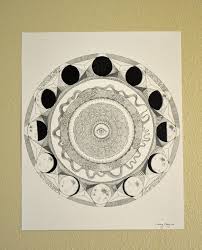
The Day Humanity Touched the Moon
On 20 July 1969, I remember the adults in the house speaking in hushed tones. There was an unmistakable sense of awe. Apollo 11 had done the impossible. Neil Armstrong had stepped onto the Moon.
Whether he actually said it exactly that way or not, history has gifted us one of its greatest lines:
“That’s one small step for man, one giant leap for mankind.”
Between you and me, perhaps he also laid the foundation for lunar tourism—maybe even galactic tourism. Flash Gordon would have been thrilled.
The Moon landing wasn’t just about planting a flag. It quietly changed the world in ways we still live with today.
The race to reach the Moon accelerated technologies that now sit in our pockets and hospitals. NASA’s demand for lighter, faster and more reliable electronics helped drive the development of integrated circuits—the ancestors of modern computers and smartphones. Miniaturisation took off because spacecraft couldn’t afford bulky equipment.
Medicine benefited too. Monitoring astronauts in space led to advances in remote patient monitoring, portable medical devices, improved imaging technology, better water purification systems, advanced materials for prosthetics, infrared thermometers, and techniques that later found applications in heart care and rehabilitation. Even memory foam, scratch-resistant lenses and cordless tools owe something to innovations developed during the space programme.
In trying to get people to the Moon, we ended up making life on Earth better.
Then comes the philosophical question.
What really changed?
We didn’t become wiser overnight. Wars continued. Poverty remained. Human beings still found creative ways to make a mess of things. If we’re being honest, we even started wondering whether we’d eventually dump our rubbish on the Moon. Thankfully, physics has a sense of humour—on the Moon, things don’t quite “settle” the way they do here.
Yet something profound did shift.
For the first time, humanity saw Earth not as the centre of everything, but as a fragile blue home suspended in an unimaginably vast universe. Our perspective expanded. The collective imagination stretched. We realised that impossible was often just another engineering problem waiting for enough determined people to solve it.
As a hypnotherapist, I find that fascinating.
Every great breakthrough begins by challenging an unconscious belief about what is possible. Before Apollo 11, landing on the Moon belonged to science fiction. After Apollo 11, it became history.
Years later, India carried that inspiration forward with Chandrayaan. It wasn’t built by superheroes. It was built by ordinary people with extraordinary discipline—scientists, engineers, technicians, mathematicians, administrators—all taking thousands of small, calculated steps towards one audacious dream. That is how giant leaps are really made.
And yes, despite a few enthusiastic movie stars occasionally sounding as though they personally launched the spacecraft, the real heroes were the countless people whose names most of us will never know.
Whether you dream of walking on the Moon, discovering that the old “man in the Moon” from childhood isn’t actually there, or simply exploring life with more curiosity than fear, the choice is yours.
Every giant leap begins with one small step.
Reflection Time
Where were you when you first learned about the Moon landing—or when did you first appreciate what it meant?
And more importantly…
What is one small step you’re taking this week that could become a giant leap in your own life?
I’d love to read your answers in the comments.


Leave a Reply