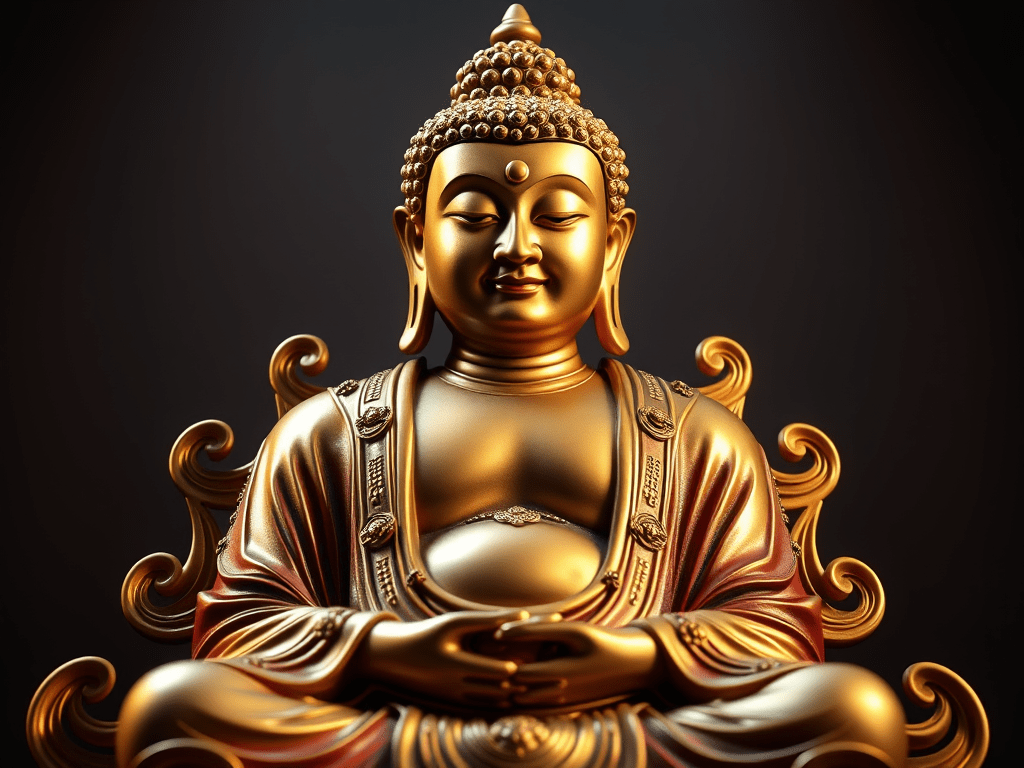
“Angulimala… why him?”
The thought drifted across Aryamba’s mind like an uninvited ghost, baffling and out of place. Sitting alone on the salt-crusted stone ledge of the Ribandar embankment, staring into the slow gray swell of the Mandovi river, she could only shake her head in sheer bewilderment. Why the hell was that story surfacing right now? A bandit from ancient folklore who chopped off fingers and wore them like a necklace—it was a tale she had always disliked, violent and absurd. What did he have to do with anything?
A shadow fell across the stone beside her.
Geshe Tenzin Lobsang pulled up the folds of his maroon robes and sat down, his presence carrying the unhurried calm of Drepung Loseling and Emory’s quiet seminar halls. He looked at her furrowed brow, then out at the water.
“Ah,” Geshe-la murmured with a dry, knowing glint in his eye. “The gentleman with the finger necklace. A collector. Very messy hobby.”
“Not funny,” Aryamba retorted, not turning her head.
“What upset you?” he asked gently, leaning forward, resting his forearms on his knees.
The dam broke, but not with theatrical wailing—with a raw, choking disgust aimed entirely at herself.
“I wanted to hit her, Geshe-la,” she whispered, her voice trembling with horrified disbelief. “When she throws her daily tantrums… when she resists every spoon of broth and refuses to cooperate… I wanted to raise my hand and physically strike my mother-in-law. When I have to haul her up and carry her across the room, I just want to toss her onto the bed like a sack of potatoes. Just dump her there and walk away.”
She turned to him, her eyes wide with bewilderment and shame.
“Where is this cruel streak coming from? I fall so low in my own esteem when that thought crosses my mind. I look at myself and I think: Who have I become?”
The quiet confession gave way to the accumulated weight of thirty-five years. The gentle, structured life she had built with Ananthashayana, now fraying at the edges.
“Thirty-five years of marriage, Geshe-la,” she said, the quiet anger finally creeping in, precise and hard. “Thirty-five years. And whenever there was a family dispute, the door was shut firmly in my face: ‘Family matter, Aryamba, leave it.’ I was kept outside the circle. But now that she cannot move, now that she has to be lifted, bathed, carried everywhere—suddenly I am default family. Taken for granted to do the heavy lifting.”
She looked down at her hands.
“And then Anantha… he gathered the sacred things. The Ganapathi, the kalash, the Krishna idol, even the ring. He returned them to me. Handed them back and said he was simply done with elaborate rituals. No explanation, just handing them back. To give back what I gave him… it felt like absolute, cold rejection. Like I am discarded, yet still expected to carry his burden.”
Geshe-la paused. A quiet smile touched the corners of his mouth.
“Ha… now I get it. Angulimala.”
Aryamba frowned at him. “What?”
“Think of the boy Ahimsaka,” Geshe-la said, his voice dropping into a steady, reflective rhythm. “The bright, devoted student. When his teacher—blinded by jealousy and deceit—demanded a cruel guru dakshina of one thousand severed fingers, the boy obeyed. Not out of malice at first, but out of obedience, out of a distorted need to fulfill a duty imposed upon him. He became Angulimala, the feared bandit of the forest, collecting fingers, driven by a violent task he never truly owned, until the Buddha met him on the path. Angulimala ran after him, shouting for him to halt. And the Buddha turned and said, ‘I have stopped, Angulimala. You stop too.’”
Geshe-la adjusted his spectacles, turning his gaze back to Aryamba.
“Well. The rage is very loud. Very impressive. Almost operatic. But look at where the confusion lies.”
He leaned down and traced a simple square in the dust between them with his finger, dividing it into four distinct panes.
“Look at the facts before you drown in the narrative,” Geshe-la said, tapping the first quadrant.
“Here is what is known to both of you: Ananthashayana returned the Ganapathi, the kalash, the Krishna murti, the ring. He stated he was stepping back from the rituals. You felt deeply hurt. Yet, at the same time, the practical reality of lifting and caring for his mother remains on your shoulders. That is the bare event.
“Now, look at the second space—what is known to Anantha, but hidden from you. What did returning those items actually mean to him? Was it an act of deliberate coldness? Or was it a man quietly overwhelmed, stripping away outer rituals because he can no longer manage them? You cannot know. You never asked.
“Then, the third space—what you know, but keep completely hidden from Anantha. You experienced the return of those gifts as a profound rejection: ‘You push me away, yet you expect me to carry your mother.’ You keep the hurt, the exhaustion, and that violent urge locked inside because you dread the friction of laying it bare. You swallow it, and inside the dark, it ferments into cruelty.
“And the last space: the unknown. What happens if you stop organizing your entire behavior around his reactions? What becomes possible if you speak clearly, without malice, and draw a clean boundary?”
Aryamba looked down at the four windows etched in the dirt.
“The event happened,” Geshe-la said softly. “Anantha returned the murti. You felt hurt. The hurt became anger. Then your mind built the bridge: ‘He rejects me, but takes me for granted to serve his mother.’ And the trap snapped shut. The hidden truth isn’t just that you are angry about carrying an old woman. It is that your emotional state is still being organized entirely around what Anantha and his mother do.”
“I am tired, Geshe-la,” she whispered, the anger draining out, leaving only a vast, hollow exhaustion. “God, I am so tired.”
“Then drop the garland,” Geshe-la said, his voice stripped of all irony, leaving only pure, surgical clarity. “You do not need to forgive them today. You do not need to stage a dramatic reckoning tonight. But you must stop pretending to be the victim of a script you keep agreeing to perform.
When the Buddha stood before Angulimala, he didn’t fight him, nor did he plead. He said: ‘I have stopped. You stop.’ The violence wasn’t the bandit’s sword, Aryamba—it was his relentless pursuit of validation through slaughter.
Stop running. Stop carrying the cord that ties your worth to their approval. Tell him: ‘When you return what I gave you, I experience it as rejection. When you pair that with the expectation of caregiving, it creates enormous anger in me.’ Speak your truth without weaponizing his intent. Cut the karmic tether. Not with fury, Aryamba. Compassion is the only blade clean enough to sever a thirty-year chain without poisoning the hand that wields it.”
The river wind blew across the Ribandar shore, cold and steady, sweeping a thin layer of dust across the etched lines between them. For the first time in years, the roaring in Aryamba’s head fell dead quiet.
Live Webinar: The Architecture of Forgiveness
Tracing the Root of Rage & Karmic Release
Thursday | 7:00 PM IST
(Access link will be shared via direct message or on request)
Listen to deeper conversations on inner dialogue, philosophy, and narrative deconstruction on Spotify:The Mind & Story Podcast


Leave a Reply