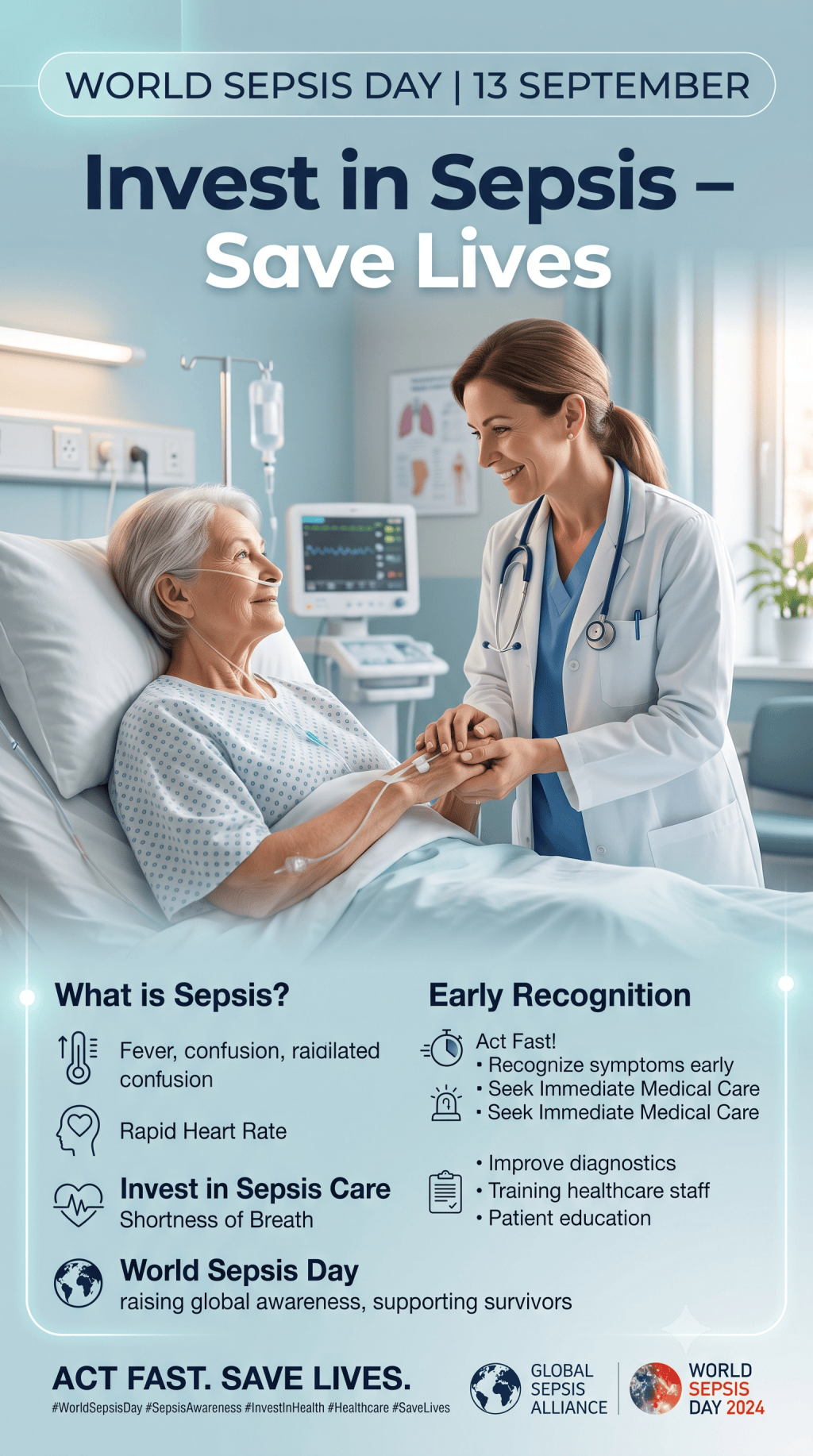
Invest In sepsis.Save a Life.
The Mango Meadows was low in energy. Dr. Chits had just lost a patient to sepsis.
The silence around the table was heavy, the kind that settles in when doctors face the one diagnosis that still blindsides everyone.
Every September 13th, the healthcare world marks World Sepsis Day. The 2026 theme is “Invest in Sepsis – Save Lives.” Before your eyes glaze over thinking this is another dry public-health lecture, consider this: roughly 11 million people die of sepsis every single year. That is nearly one in every five deaths globally.
It is common, deadly, and entirely unforgiving of delays.
If you are wondering what is sepsis anyway…Think of your immune system as an over-enthusiastic neighbourhood watch. A tiny burglar—a stray bacterium from a cut, a nasty chest bug, or a urinary tract infection—breaks into your house.
Normally, the watch dog barks, security arrives, and the intruder is marched out.
With sepsis, the immune system panics. Instead of tackling the burglar, it calls in an airstrike on the living room, sets fire to the kitchen curtains, and accidentally floods the bathroom.
In plain terms:
sepsis isn’t just an infection; it’s your body’s wildly dysregulated, self-destructive overreaction to one.
Left unchecked, blood pressure plummets, internal organs switch off like faulty circuit breakers, and the patient lands straight in the ICU.
Years ago, medicine treated sepsis as mere “bad blood poisoning” or heavy systemic inflammation. Today, we know better: it is a ticking clock of organ failure where losing an hour can cost a life.
Where does the Fire Start—Sepsis doesn’t fall out of thin air; it needs an entry point. Any microbial trespasser can spark it—bacteria (the usual suspects), viruses like influenza or COVID-19, and even fungi.
Here is where it usually creeps in:
- The Lungs (40–60%): Pneumonia is by far the biggest culprit.
- The Belly (15–30%): A burst appendix, an angry gallbladder, or a perforated bowel.
- The Waterworks (15–30%): A simple urinary tract infection (UTI) that climbs up into the kidneys.
- Skin and Soft Tissues: An infected scrape, a surgical incision turned sour, or an untended pressure sore.
Anyone can get caught in the crossfire, but the scales tip heavily against infants, seniors, pregnant mothers, diabetics, cancer patients on chemotherapy, and anyone whose immune reserves are running on fumes.
Red Flags: How to Spot the Fire Early
When a routine infection turns into sepsis, it stops looking like a simple cold or an upset stomach. The widely used SEPSIS mnemonic lays it out clearly:
| Letter | The Warning Sign | What It Actually Looks Like |
| S | Slurred speech or confusion | Drowsy, disoriented, or unusually difficult to wake |
| E | Extreme shivering or pain | Bone-rattling chills or “the worst muscle pain ever” |
| P | Passing no urine | Dry diapers in babies or going a whole day without urinating |
| S | Severe breathlessness | Rapid panting, as if sprinting up five flights of stairs |
| I | “I feel like I might die” | A profound, terrifying sense of impending doom |
| S | Skin mottled or discoloured | Cold, clammy, bluish, or patchy, pale skin |
If someone battling an infection develops even two of these signs, skip the home remedies. Head straight to the emergency room and ask the triage doctor the one question that cuts through the noise: “Could this be sepsis?”
The “Golden Hour”: Inside the Emergency Room
Once suspected sepsis comes through hospital doors, routine pleasantries pause and a high-stakes sprint begins:
- Draw the Labs: Blood cultures are drawn immediately to identify the bug—without delaying treatment while waiting for results.
- Hit with Broad-Spectrum IV Antibiotics: Delivered within the first hour if the patient is in septic shock.
- Open the Fluid Taps: Rapid IV crystalloid fluids (30 mL/kg) restore circulation and bring deflated blood vessels back to life.
- Bring in the Pressors: If blood pressure stays dangerously low after fluids, drugs like norepinephrine step in to squeeze the vessels and keep vital organs perfused.
- Clear the Source: If there’s an abscess pool, an obstructed kidney stone, or a colonized central line, antibiotics alone won’t work. A surgeon or radiologist must go in, drain the pus, debride tissue, or pull the infected hardware.
Life After Sepsis: The Story Doesn’t End at Discharge
Surviving the intensive care unit is only half the battle. Up to 30% of survivors die within a year, frequently from recurrent infections or cardiovascular complications.
Many more contend with Post-Sepsis Syndrome:
- Crushing physical fatigue and muscle weakness
- Memory lapses, poor concentration, and brain fog
- Anxiety, depression, and post-traumatic stress
Discharge isn’t the finish line; long-term rehabilitation and disciplined follow-up care matter just as much.
How Do We “Invest in Sepsis”?
The 2026 motto—“Invest in Sepsis – Save Lives”—sounds like an economic policy pitch, but the smartest investments start at home:
- Stay Vaccinated: Jabs against flu, pneumococcal disease, and COVID-19 halt severe infections before they start.
- Respect Basic Hygiene: Soap, clean water, and proper wound care remain the most cost-effective defenses on Earth.
- Stop Popping Leftover Antibiotics: Casual self-medication breeds drug-resistant superbugs that shrug off standard treatments in the ICU.
- Invest in Health Systems: Clean maternity wards, strict infection control, antimicrobial stewardship, and rapid hospital sepsis protocols save lives every day.
The next time someone with a cough, a wound, or a urinary infection seems unexpectedly confused, breathless, or drastically unwell, don’t wait and watch.
Trust your instincts, get to an emergency room, and ask: “Could this be sepsis?” It costs nothing to ask, and it might just buy someone a lifetime.


Leave a Reply