Alzheimer’s Awareness
Sometime ago, in a fit of classic empty-nester frustration, I recorded a reel after standing blankly in front of my own kitchen stove, utterly baffled by how to turn on the gas. I put the absurdity out there on the internet. My friend Manoj Vijayan messaged back within minutes: “Don’t worry mozhai, South Indians don’t get Alzheimer’s—we only get Avialzheimer’s.”
We had a great laugh. It was the kind of sharp, self-deprecating line that takes the sting out of a clumsy morning. If mixing up names, searching for the spectacles perched on top of your head, or looking for the car keys while holding them is dementia, half the subcontinent qualifies by thirty-five.
Then my mind wandered back years earlier to my grandmother. She had just brewed a fresh pot of hot tea, walked over to the kitchen sink, and quietly poured the entire steaming decoction straight down the drain. Then she stood there, looking at the empty pan and the wet sink, completely bewildered by what her own hands had just done. At the time, the family chuckled and filed it away under “granny’s eccentric quirks.”
Looking back, the difference between those two moments is the whole story. Blanking on a stove knob when your brain is running twenty browser tabs at once is a momentary software glitch. Making a hot pot of tea and watching it disappear down the pipe because the mental script went missing—that is a hardware failure.
There is an ocean between absentmindedness and watching the brain’s operating system slowly dismantle itself.
Most of us treat Alzheimer’s like an inevitable nuisance of old age, the neurological equivalent of balding or needing knee replacements. But it doesn’t arrive overnight like a bad cold. It creeps in through tiny fractures: an uncle who ran an accounting firm for forty years suddenly accusing the bank of stealing three thousand rupees because the ledger won’t balance; a parent asking what time the car is coming seven times in twenty minutes, not because their ears are bad, but because the memory never saved to the hard drive; or someone losing their bearings on the street corner they’ve crossed every morning since 1985.
We laugh off the early slips because the alternative is admitting something terrifying is brewing.
And then there’s the biological math nobody likes to bring up at dinner parties: brain health isn’t an emergency repair job you start at seventy. What we do to our bodies in our forties and fifties writes the script for the third act. The runaway blood pressure we ignore, the borderline blood sugar we promise to tackle after the festive season, the hearing loss we pretend isn’t happening because hearing aids ruin our vanity, the weeks of sleeping four broken hours a night—none of that vanishes into thin air. It all takes a quiet toll on cerebral plumbing.
What really gets left in the dark, though, is the sheer psychological weight on both sides of the room.
In the early and middle stages, people often know exactly what is slipping through their fingers. You see them catch the concerned glances exchanged across the dining table. You see the sheer mortification when someone gently takes away the car keys or steers them away from the stove. That loss of control brings a quiet, crushing despair. Not long ago, an elderly gentleman, a Palkhivala, jumped off a third floor because he simply could not bear the indignity of watching himself erode into helplessness.
When an elder feels their intellect collapsing, suicidal despair doesn’t always announce itself with a manifesto. More often, it sounds like quietly refusing cardiac tablets, skipping meals, or muttering, “Everyone would have an easier time if I simply wasn’t around.”
And behind them stands the caregiver, running a one-person high-dependency ward with no shift changes, no sick leave, and certainly no applause.
Psychologists call it ambiguous loss—grieving someone who is sitting right across from you eating toast. You field the fourteenth accusation that you stole their purse before noon, you drag yourself out of bed at 2 AM because they are wandering around looking for parents who died thirty years ago, and you swallow your own life whole just to keep the ship from sinking.
Human biology simply wasn’t built to run on that kind of chronic adrenaline without cracking. Caregiver burnout isn’t being “a bit tired”; it’s a dangerous wall. When you’ve been isolated for six months, surviving on two hours of sleep and cold coffee, the mind starts whispering dark things: “I can’t survive another week of this, and there is no way out.”
It isn’t a sign of being heartless or selfish. It’s the engine seizing up because the oil ran dry three towns back.
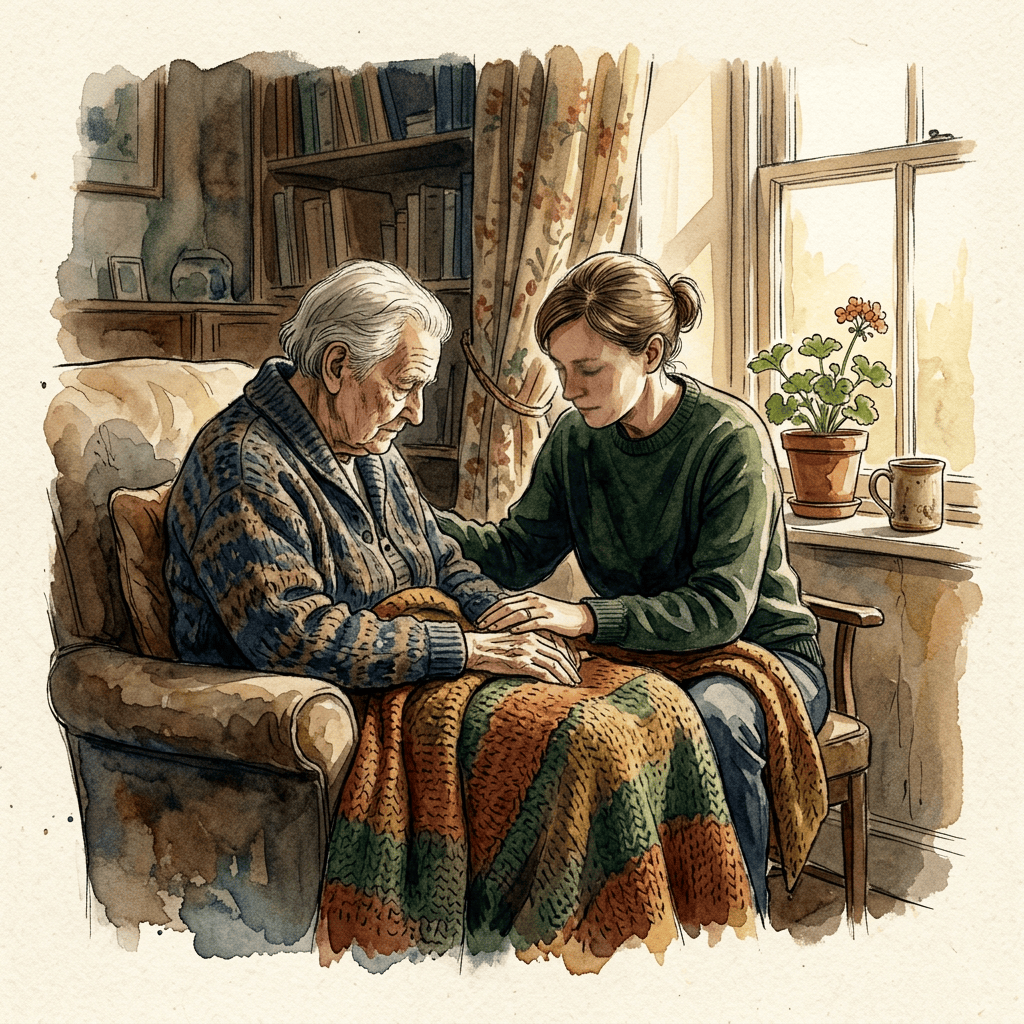
Yet even when things fall apart, odd pockets of grace show up in the strangest ways. A grandmother who doesn’t know the year or your name will suddenly sing every lyric of an old vintage track on the radio without missing a beat. An agitated elder who is terrified of the room will soften the second you sit down, shut up, and just hold their hand. The intellect might be misfiring, but the emotional radar never really shuts off. They might not know who you are, but they know instantly whether you are safe.
Alzheimer’s isn’t neat, and it certainly isn’t inspiring. It is messy, exhausting, and heartbreaking. But spotting the real shifts early, paying attention to our own bodies before the damage settles in, and recognizing when a caregiver is quietly drowning—that’s the real work. Because the memory might go, but the person sitting in that chair still feels every bit of the world around them.


Leave a Reply