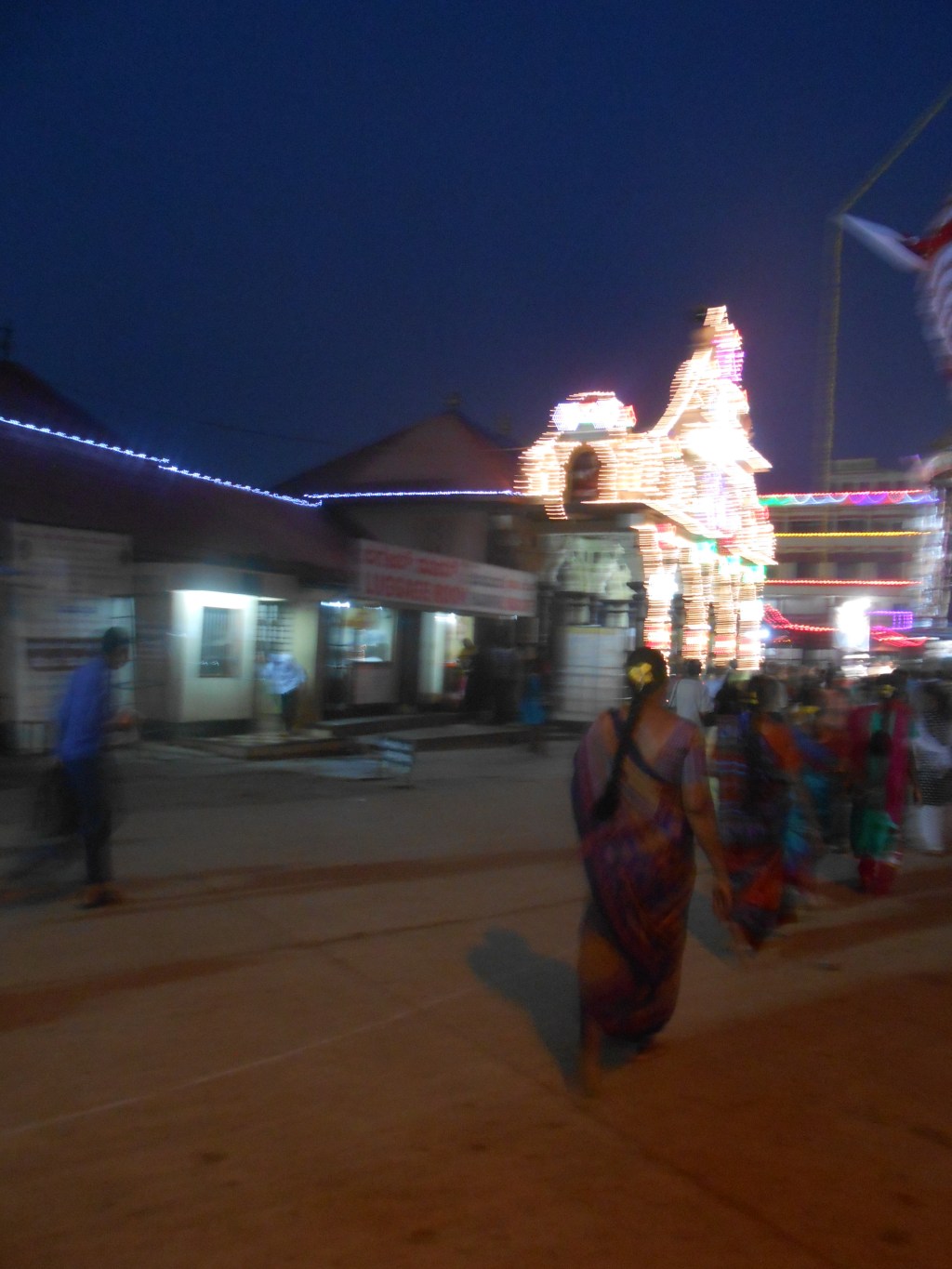
Being brought up in Udupi, the Krishna Matha wasn’t some distant, sanctified retreat—it was our actual playground. We ran right inside the temple, barefoot and loud. Back then, Krishna Ashtami wasn’t the deafening media circus it has become, nor the fussy Malnaad temple pageantry. The domestic drill was ironclad: families sat down together around gargantuan hot-oil vats to churn out unde and chakkuli. Outside, the door would rattle and the chadmavesha would turn up—our homegrown trick-or-treaters demanding a few coins to buy off their nuisance value.
Then came the real street carnival: dance-vesha troupes featuring grown men shamelessly dressed as women gyrating to the latest Rajkumar banger, the raw thumping of the huli-vesha (tiger dance), the stomping perda-vesha, and the wild sirka-siddhi. Down by the temple, the community broke out of the torrential monsoon to smash the mosaru-kuduke. Tins of unde-chakkuli were traded across compound walls, sweetened by the sheer predatory certainty that once our Ashtami was done, the Konkani kids in class owed us their Ganesh Chaturthi goodies.
Underneath this sweet domesticity lay an older, rougher social reality. Across the South, the village cattle used to be driven out together to graze by a lone cowherd—the Gopala. When leopards or tigers broke cover, he fought them off with a stick and his life. If he died protecting the village wealth, the community built a Gopalaswamy Devasthana. Outside stood the veeragallu—the hero stone—and every elder in the hamlet could recount the blood-and-guts tale of the brave lad buried there. Those shrines stood barely fifty years ago. Today? The original martyr has been quietly airbrushed out of his own death monument. The local hero is forgotten, replaced by a smooth new myth about a pious devotee who built a temple for Lord Krishna. It’s textbook cultural digestion—what the art historian Dr. Jyotindra Jain
tracks as Sanskritization or Aryanization, swallowing fierce, vernacular soil deities and dressing them up in mainstream pantheons, not unlike Marwar turning pastoral worship into Thakurji or the Gujarati mercantile guilds claiming Shrinathji.
Those rituals anchored us because they were heavy and tangible, not decorative. Life was a quilt where individual, stubborn family quirks stayed intact while still stitched to the larger village cloth. Men handed down the liturgy to their boys; mothers drilled the exact tension of the wooden chakkuli press into their daughters. My aunt—whom you’ll know if you follow the work of independent filmmaker Ramachandra P.N.
—was a self-styled modern rebel, a Jan-hennu who outright refused to learn the family snack craft. But the moment she walked into her married kitchen and tasted the quiet shame of being out-cooked by her mother-in-law, she was back on the next bus home to frantically drill the recipe until her hands blistered. And every child schemed to get their hands on a petle—that lethal little bamboo popgun you crammed with green berries to blast miniature sonic booms at each other’s shins.
Rituals are meant to be grounding. They are supposed to keep your ego tethered to something larger than yourself. What we have now is an absurd, neon-lit scorecard.
Walk into Udupi today and you’re hit in the face by blinding flex hoardings, corporate-sponsored pili teams, and the suffocating desperation of “Muddu Krishna” and “Yashoda-Krishna” beauty pageants. We’ve turned an ancient community bond into an anxious parental dick-measuring contest. Devotion has been hollowed out into a commodity; spiritual archetypes are now just social capital to be flaunted before local bank managers with trophies.
And don’t let me off the hook, either. My mother, a working physics teacher, stood over hot oil and hand-rolled five varieties of unde right up until five years ago, pressing two to three hundred chakkulis every single season without complaint. Me? I stood in an air-conditioned queue at an Udupi Darshini, bought mine wrapped in plastic cellophane, and walked home wearing a pathetic moral halo: “Oh, relax, I bought it from our cousin’s branch!” Modern efficiency is just laziness wearing an excuse.
The day after Janmashtami comes Vittal Pindi. I always threaten to do a deep historical dive into the etymology before next year, but the street drama speaks for itself anyway. The exploding petle to spook forest predators, the snarling huli-vesha, the heavy karadi-kunitha (the bear dance), and pots of sour curd and fresh butter smashed overhead—all of it screams an ancient, pagan celebration of pastoral survival, stubbornly clinging to life right beneath the tar and commercial varnish.


Leave a Reply