Tag: Invisible Impact
-
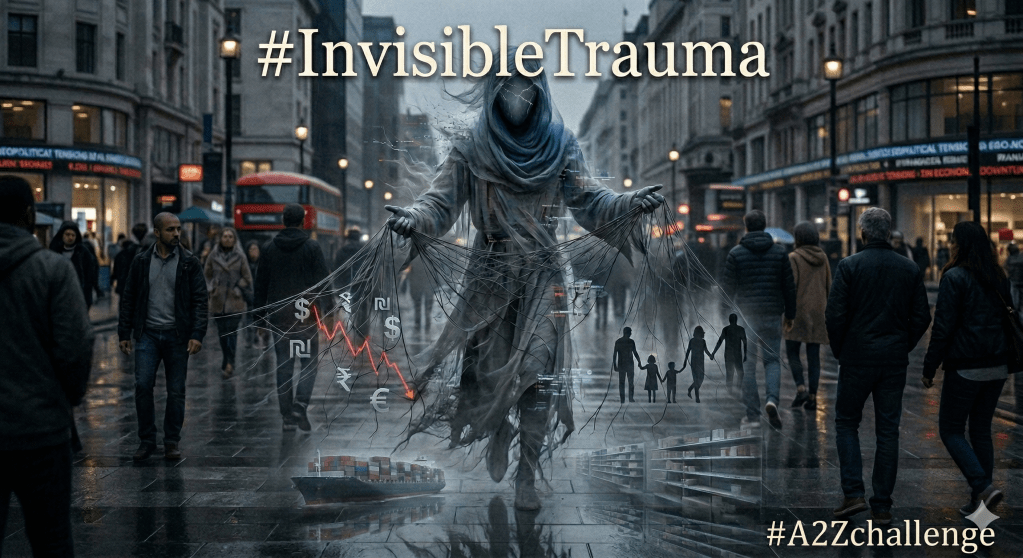
Supply Chain Fragility
Global supply chain fragility turns efficiency into illusion; when disruption strikes, scarcity follows, and ordinary people improvise—growing, bartering, adapting—proving resilience lives closer than logistics.
-
Ration Cards
Scarcity lingers as symptoms—hoarding, anxiety, distrust. The ration card survives not in pockets, but in minds, quietly shaping behavior long after shortages end.
-
Quiet Resistance.
As a child of the Emergency, I learnt silence early—yet beneath it, quiet resistance pulsed, stubbornly preserving agency, dignity, and a society’s unwillingness to fully submit.
-
Psychological Aftershocks.
War doesn’t end; it relocates—into bodies, families, and generations, where unprocessed fear becomes inherited anxiety, silent behaviors, and symptoms medicine struggles to fully explain.
-
Oil Dependency.
War no longer invades borders; it enters kitchens. Oil prices rise, tempers follow, and households quietly surrender—paying the cost of conflicts they neither started nor understand.
-
Anxiety Economies.
Anxiety economics reshapes behavior quietly, as scarcity mindset drives caution, delays care, and alters spending—echoing across generations through inherited habits, fear, and fragile trust.

